Looking Beyond the AMD Radeon Pro W7800 32GB? 6 Alternatives Worth a Look
As an Amazon Associate we earn from qualifying purchases. Links on this page are affiliate links.
The AMD Radeon Pro W7800 32GB Workstation GPU offers 32GB of GDDR6 memory and supports up to four 4K displays at 120Hz. It includes 45 TFLOPS of FP32 performance and AV1 encoding for demanding professional workloads. If you are looking for amd radeon pro w7800 alternatives, you might want a different memory size, physical dimensions, or brand. Some users prefer the 24GB capacity of the NVIDIA Quadro RTX 6000 or the 48GB of the AMD Radeon Pro W7900. Others may need a smaller card for standard cases or a gaming-focused card with different cooling solutions. We selected these options because their specifications overlap with the original card's core capabilities. Each alternative provides distinct advantages in memory capacity, interface generation, or physical footprint. You can choose based on whether you prioritize VRAM for large datasets, PCIe 5.0 connectivity, or specific brand ecosystems. The list covers a range of workstation and gaming graphics cards that share key features like GDDR6 memory and professional or high-performance gaming use cases. This allows you to compare specs directly without relying on subjective reviews. Your choice depends on whether you need ISV certification, higher memory bandwidth, or a specific form factor for your build. We have ranked these products to help you find the best match for your technical requirements.
How alternatives compare to W7800
NVIDIA Quadro RTX 6000 24GB GPU
The NVIDIA Quadro RTX 6000 provides 24GB of GDDR6 memory, which is 8GB less than the W7800. It targets professional 3D and AI workloads with a focus on stability. You lose some raw memory capacity compared to the AMD card, but gain NVIDIA-specific features. This option suits engineers who need reliable workstation performance for heavy tasks. It is a budget-friendly alternative if you do not require the full 32GB buffer. The trade-off is lower memory volume for potentially different software optimization. Choose this if your applications prioritize NVIDIA architecture over pure VRAM size.
AMD Radeon Pro W7900 48GB
The AMD Radeon Pro W7900 48GB offers 48GB of GDDR6 memory, significantly more than the W7800’s 32GB. This extra capacity helps when loading massive textures or datasets directly into VRAM. It is the premium choice for users who hit memory walls with smaller GPUs. The W7900 is slightly heavier and taller than the W7800. You gain substantial memory headroom for heavy 3D rendering and AI workloads. This card fits professionals who need to process larger scenes without swapping data. If your workflow demands more than 32GB, the W7900 is the logical upgrade within the same AMD Pro lineup.
ASUS TUF Gaming Radeon RX 9070 16GB
The ASUS TUF Gaming RX 9070 has only 16GB of GDDR6 memory, half the capacity of the W7800. It is designed for gaming with durable cooling rather than professional workstation tasks. You sacrifice 16GB of VRAM and professional API support for a gaming-focused build. This card suits gamers who prioritize durability and 16GB of VRAM for high-refresh-rate gaming. It is not suitable for heavy 3D rendering or AI workloads that require large memory buffers. Choose this alternative only if you are shifting from professional work to gaming, and do not need ISV-certified drivers or extensive multi-display support.
ASRock Intel Arc Pro B60 24GB Graphics Card
The ASRock Intel Arc Pro B60 provides 24GB of GDDR6 memory, which is 8GB less than the W7800. It features PCIe 5.0 connectivity for faster data transfer speeds. This card targets AI inference and ISV-certified workstation tasks. You lose some memory capacity but gain modern PCIe 5.0 support and Intel-specific architecture features. It fits users who prioritize memory capacity and specific Intel features over raw AMD bandwidth. The card is smaller and lighter than the W7800. Choose this if your workflow benefits from Intel’s media engines and you need stable workstation performance for professional applications.
ZOTAC GeForce RTX 3070 Twin Edge OC 8GB
The ZOTAC RTX 3070 offers only 8GB of GDDR6 memory, which is 24GB less than the W7800. It is a gaming card optimized for 1440p gaming with ray tracing. You lose professional workstation features, large memory capacity, and multi-display support. This card suits gamers who value performance per dollar over professional capabilities. It is not suitable for 3D rendering or AI workloads that require extensive VRAM. The RTX 3070 uses PCIe 4.0 connectivity. Pick this alternative only if you are strictly gaming and do not need the professional drivers or memory buffer provided by the W7800.
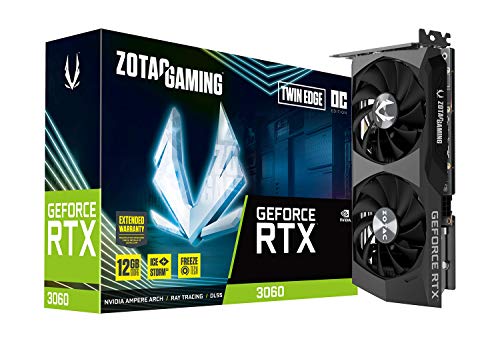
ZOTAC GeForce RTX 3060 Twin Edge 12GB
The ZOTAC RTX 3060 provides 12GB of GDDR6 memory, which is 20GB less than the W7800. It is designed for gaming with high VRAM needs compared to other gaming cards. You sacrifice 20GB of professional memory capacity for a smaller, gaming-focused form factor. This card suits users with standard cases who do not need workstation capabilities. It is not ideal for heavy 3D rendering or AI tasks. The RTX 3060 uses PCIe 4.0 connectivity. Choose this alternative if you need more memory than typical gaming cards but do not require the full 32GB buffer or professional features of the W7800.
Quick picks
Our 7 picks

AMD Radeon Pro W7800 32GB Workstation GPU
Best for: Heavy 3D rendering and 8K display workstations
- Graphics Processor
- AMD Radeon Pro W7800
- Memory Size
- 32GB
- Memory Type
- GDDR6
- Use
- Workstation
- Dimensions
- 11 × 38.7 × 13.5 inches
- Weight
- 2.7 pounds
The AMD Radeon Pro W7800 is a workstation graphics card featuring 32GB of GDDR6 memory and 70 Compute Units. It delivers 45 TFLOPS of FP32 performance and supports DisplayPort 2.1 for up to four 4K displays at 120Hz or a single 8K display at 60Hz. This card suits professionals needing high memory capacity and broad API support for 3D rendering and AI workloads.
Pros
- 32GB GDDR6 memory for large datasets
- 45 TFLOPS FP32 performance
- Supports up to four 4K displays at 120Hz
- DisplayPort 2.1 connectivity
- AV1 encoding and decoding support
Cons
- 2.7 pounds weight may limit compatibility with smaller cases
- 11 inches length requires ample chassis space
- No mention of dual-slot design, likely requires more width
Good fit if
- You need 32GB of VRAM for complex 3D scenes
- You require support for 8K displays at 60Hz
- You use applications like DaVinci Resolve or Maya
Skip if
- You have a small form factor PC with limited space
- You only need 8GB of VRAM for light tasks
- You require NVIDIA CUDA cores for specific software
Verdict: The AMD Radeon Pro W7800 32GB Workstation GPU is a high-memory solution for professionals handling large 3D or AI workloads. It fits users who need extensive VRAM and multi-display support for creative applications.

NVIDIA Quadro RTX 6000 24GB GPU
Best for: Professional 3D and AI workloads
- Graphics Processor
- Quadro RTX-6000
- Memory Size
- 24GB
- Memory Type
- GDDR6
- Use
- Workstation
The Nvidia Quadro RTX 6000 is a workstation graphics card designed for professional tasks. It features a 24GB GDDR6 memory buffer, which helps manage large datasets and complex 3D scenes. This card targets users who need stable performance for AI and 3D modeling. It fits into the professional market rather than the gaming segment. You should consider it if your workflow prioritizes memory capacity and workstation stability over consumer features.
Pros
- 24GB GDDR6 memory capacity
- Dedicated workstation use case
- Active cooling system
Cons
- Older architecture compared to newer RTX 40 series cards
- Lacks consumer gaming features like DLSS
- No mention of modern display outputs like DisplayPort 2.1
Good fit if
- You need 24GB of VRAM for large 3D models
- You run professional workstation software
- You prioritize memory capacity over gaming performance
Skip if
- You are looking for the latest gaming GPU
- You need DLSS 3 support
- You want a budget-friendly consumer card
Verdict: Nvidia Quadro RTX 6000 24GB offers high memory capacity for professional workloads. It suits engineers and designers who require stable workstation performance for heavy 3D or AI tasks.

AMD Radeon Pro W7900 48GB
Best for: Heavy 3D rendering and AI workloads
- Graphics Processor
- AMD Radeon Pro W7900
- Memory Size
- 48GB
- Memory Type
- GDDR6
- Use
- Workstation
- Dimensions
- 11 × 38.7 × 17.6 inches
- Weight
- 3 pounds
The AMD Radeon Pro W7900 is a workstation GPU designed for heavy 3D rendering and AI tasks. It features 96 Compute Units and 48GB of GDDR6 memory. This large buffer handles massive datasets without swapping. It supports 8K displays and AV1 decoding. You should consider this card if your software requires high VRAM capacity for complex scenes or large models.
Pros
- 48GB GDDR6 memory capacity
- 61 TFLOPS FP32 performance
- Supports 8K displays at 60Hz
- AV1 encoding and decoding support
Cons
- No mention of fanless or passive cooling design
- Physical dimensions are large and may not fit small cases
- Lacks explicit mention of multi-GPU scaling support
Good fit if
- You need 48GB of VRAM for large 3D scenes
- You work with 8K video workflows
- You run AI or compute-heavy applications
Skip if
- You require a low-profile card for a small chassis
- You only need 8GB to 16GB of VRAM
- You are looking for a consumer gaming card
Verdict: The AMD Radeon Pro W7900 48GB is a high-capacity workstation card for users who hit memory walls with smaller GPUs. It fits professionals who need to load massive textures or datasets directly into VRAM.

ASUS TUF Gaming Radeon RX 9070 16GB
Best for: Gaming with 16GB VRAM and durable cooling
- Graphics Processor
- Radeon RX 9070
- Memory Size
- 16GB
- Memory Type
- GDDR6
- PCIe Interface
- PCIe 5.0
- Slot Width
- 3.125 slot
- Use
- Gaming
The ASUS TUF Gaming Radeon RX 9070 OC Edition offers 16GB of GDDR6 memory for demanding tasks. It measures 13 inches long and 5.51 inches wide, fitting standard cases. The card uses a 3-slot design with three axial tech fans for cooling. Military-grade components and PCB coating protect against dust and moisture. This build targets gamers who need reliable performance under heavy loads.
Pros
- 16GB GDDR6 memory capacity
- Three axial tech fans for efficient cooling
- Military-grade durability components
- PCB coating protects against dust and moisture
Cons
- 16GB memory is lower than the 24GB or 32GB options in this list
- 13-inch length requires adequate case space
- Designed for gaming rather than professional workstation workloads
Good fit if
- You need 16GB of VRAM for high-resolution gaming
- You want a card with robust physical protection against dust
- You have a case that fits a 13-inch graphics card
Skip if
- You require 24GB or more of VRAM for professional work
- You need a card specifically optimized for workstation AI tasks
- You have a small form factor case with limited length clearance
Verdict: ASUS TUF Gaming RX 9070 16GB suits gamers who prioritize durability and 16GB of VRAM. It is not the best choice if you need the higher memory counts found in professional workstation cards.

ASRock Intel Arc Pro B60 24GB Graphics Card
Best for: AI inference and ISV-certified workstation tasks
- Graphics Processor
- Intel Arc Pro B60
- Memory Size
- 24GB
- Memory Type
- GDDR6
- Memory Bus Width
- 192-bit
- PCIe Interface
- PCIe 5.0
- Slot Width
- 2-slot
The ASRock Intel Arc Pro B60 Creator is a workstation GPU built on Intel Xe2-HPG architecture. It features 24GB of GDDR6 memory on a 192-bit bus and supports PCIe 5.0. This card includes dual media transcoders for AV1 and H.264 encoding. Its 200W TDP and 2-slot blower design make it suitable for compact professional chassis. You will find it ideal for AI inference and 3D rendering tasks requiring dedicated workstation drivers.
Pros
- 24GB GDDR6 memory with 456 GB/s bandwidth
- PCIe 5.0 x16 interface support
- Dual AV1 and H.264 media transcoders
- ISV certified for professional software
Cons
- 192-bit memory bus width is narrower than competitors
- Single 8-pin power connector limits headroom
- Blower-style cooling may run louder in small cases
Good fit if
- You need 24GB of VRAM for large AI models
- You require PCIe 5.0 bandwidth for future-proofing
- You use ISV-certified engineering or design software
Skip if
- You need a wider 256-bit memory bus for higher bandwidth
- You require dual 8-pin power for higher TDP headroom
- You prefer dual-fan cooling for quieter operation
Verdict: ASRock Intel Arc Pro B60 Creator 24GB offers substantial VRAM and PCIe 5.0 connectivity for professional workloads. It fits users who prioritize memory capacity and specific Intel architecture features over raw memory bandwidth.

ZOTAC GeForce RTX 3070 Twin Edge OC 8GB
Best for: 1440p gaming with ray tracing
- Graphics Processor
- GeForce RTX 3070
- Memory Size
- 8GB
- Memory Type
- GDDR6
- Boost Clock
- 1755 MHz
- Memory Bus Width
- 256-bit
- PCIe Interface
- PCIE 4.0
The ZOTAC GeForce RTX 3070 uses the Ampere architecture with 8GB of GDDR6 memory on a 256-bit bus. Its boost clock reaches 1755 MHz over PCIe 4.0. This card supports 4K gaming and features IceStorm 2.0 cooling. It suits gamers who want ray tracing and solid performance without the bulk of higher-end workstation cards.
Pros
- NVIDIA Ampere architecture with 2nd Gen Ray Tracing Cores
- 8GB GDDR6 memory with 14 Gbps speed
- Boost clock of 1755 MHz
- IceStorm 2.0 Advanced Cooling system
Cons
- Only 8GB memory limits high-resolution texture workloads
- Single fan design may run warmer under load
- Not designed for professional workstation applications
Good fit if
- You play games at 1440p or 4K resolution
- You want ray tracing performance in modern titles
- You prefer a compact card with active cooling
Skip if
- You need 16GB or more for professional rendering
- You require workstation-optimized drivers for CAD software
- You want the latest generation GPU architecture
Verdict: ZOTAC RTX 3070 8GB Gaming Card delivers solid 1440p gaming with ray tracing. It fits gamers who value performance per dollar over professional features.
ZOTAC GeForce RTX 3060 Twin Edge 12GB
Best for: Gaming with high VRAM needs
- Graphics Processor
- GeForce RTX 3060
- Memory Size
- 12GB
- Memory Type
- GDDR6
- Memory Bus Width
- 192-bit
- PCIe Interface
- PCIe 4.0
- Use
- Gaming
This ZOTAC card uses the GeForce RTX 3060 GPU with 12GB of GDDR6 memory. The 192-bit bus and PCIe 4.0 interface handle standard gaming tasks. Its 8.8-inch length fits most mid-size cases. You get solid performance for 1080p and 1440p gaming. The 12GB buffer helps with modern textures. It is a practical choice for gamers who need extra VRAM without a high-end price.
Pros
- 12GB GDDR6 memory capacity
- 192-bit memory bus width
- PCIe 4.0 interface support
- Compact 8.8-inch length
Cons
- 192-bit bus is narrower than competitors
- Not designed for professional workstation use
- No mention of active cooling fans
Good fit if
- You want 12GB of VRAM for gaming
- You have a mid-size PC case
- You play at 1080p or 1440p
Skip if
- You need professional workstation features
- You require a wider memory bus
- You need a longer warranty period
Verdict: ZOTAC RTX 3060 12GB Twin Edge offers 12GB of VRAM for gamers who prioritize memory capacity over bus width. It fits users with standard cases who do not need professional workstation capabilities.
Specifications side by side
| Spec | AMD Radeon Pro W7800 32GB Workstation GPU | NVIDIA Quadro RTX 6000 24GB GPU | AMD Radeon Pro W7900 48GB | ASUS TUF Gaming Radeon RX 9070 16GB | ASRock Intel Arc Pro B60 24GB Graphics Card | ZOTAC GeForce RTX 3070 Twin Edge OC 8GB | ZOTAC GeForce RTX 3060 Twin Edge 12GB |
|---|---|---|---|---|---|---|---|
| Graphics Processor | AMD Radeon Pro W7800 | Quadro RTX-6000 | AMD Radeon Pro W7900 | Radeon RX 9070 | Intel Arc Pro B60 | GeForce RTX 3070 | GeForce RTX 3060 |
| Memory Size | 32GB | 24GB | 48GB | 16GB | 24GB | 8GB | 12GB |
| Memory Type | GDDR6 | GDDR6 | GDDR6 | GDDR6 | GDDR6 | GDDR6 | GDDR6 |
| Boost Clock | not specified | not specified | not specified | not specified | not specified | 1755 MHz | not specified |
| Memory Bus Width | not specified | not specified | not specified | not specified | 192-bit | 256-bit | 192-bit |
| PCIe Interface | not specified | not specified | not specified | PCIe 5.0 | PCIe 5.0 | PCIE 4.0 | PCIe 4.0 |
| Slot Width | not specified | not specified | not specified | 3.125 slot | 2-slot | not specified | not specified |
| Memory | not specified | 24GB | not specified | 16GB | 24GB | 8GB | 12GB |
| GPU | not specified | not specified | not specified | not specified | not specified | not specified | GeForce RTX 3060 |
| Interface | not specified | not specified | not specified | PCIe 5.0 | PCIe 5.0 | PCIe 4.0 | PCIe 4.0 |
| Use | Workstation | Workstation | Workstation | Gaming | Workstation | Gaming | Gaming |
| Dimensions | 11 × 38.7 × 13.5 inches | not specified | 11 × 38.7 × 17.6 inches | not specified | not specified | not specified | 8.8 × 4.6 × 1.5 inches |
| Weight | 2.7 pounds | not specified | 3 pounds | 2.2 pounds | not specified | not specified | not specified |
| Length | not specified | not specified | not specified | 13 inches | 10.7 inches | not specified | not specified |
| Width | not specified | not specified | not specified | 5.51 inches | 4.41 inches | not specified | not specified |
| Color | Blue | not specified | Blue | not specified | not specified | not specified | not specified |
| Model | 100-300000075 | not specified | 100-300000074 | TUF-RX9070-O16G-GAMING | 90-GA60ZZ-00UANZ | not specified | not specified |
| Size | not specified | not specified | not specified | OC Edition | B60 | not specified | not specified |
If you evaluate older integrated processors, you can review amd advance micro device radeon alternatives through their published specifications.
Frequently asked questions
Which GPU has more VRAM than the W7800?
The AMD Radeon Pro W7900 48GB offers 48GB of GDDR6 memory. This provides 16GB more than the W7800’s 32GB. It is designed for professionals who need to load massive textures or datasets directly into VRAM. The NVIDIA Quadro RTX 6000 has 24GB, which is less. The Intel Arc Pro B60 has 24GB. Only the W7900 exceeds the W7800 capacity.
Is there a cheaper workstation alternative?
The NVIDIA Quadro RTX 6000 is labeled as the best budget option. It provides 24GB of GDDR6 memory for professional workloads. It suits engineers and designers requiring stable performance for heavy 3D or AI tasks. While it has less memory than the W7800, it remains a capable workstation card for professional use cases.
Can I use a gaming card instead of a workstation GPU?
Yes, but with trade-offs. The ASUS TUF Gaming Radeon RX 9070 16GB offers 16GB of VRAM. It is not the best choice if you need the higher memory counts found in professional workstation cards. It suits gamers who prioritize durability and specific cooling features over professional certification and larger memory pools.
Which alternative supports PCIe 5.0?
The ASRock Intel Arc Pro B60 24GB Graphics Card supports PCIe 5.0 connectivity. It offers 24GB of VRAM for professional workloads. It fits users who prioritize memory capacity and specific Intel architecture features over raw memory bandwidth. This makes it suitable for AI inference and ISV-certified workstation tasks.
What is the best option for 1440p gaming?
The ZOTAC GeForce RTX 3070 Twin Edge OC 8GB is best for 1440p gaming with ray tracing. It delivers solid performance for gamers. It fits users who value performance per dollar over professional features. It uses 8GB of GDDR6 memory and connects via PCIe 4.0, making it a standard gaming solution rather than a workstation tool.
Which card has 12GB of VRAM?
The ZOTAC GeForce RTX 3060 Twin Edge 12GB offers 12GB of GDDR6 memory. It fits users with standard cases who do not need professional workstation capabilities. It is designed for gaming with high VRAM needs. It connects via PCIe 4.0 and provides a compact form factor for standard builds.
Does the W7800 have the most memory in this list?
No. The AMD Radeon Pro W7900 48GB has the most memory. It provides 48GB of GDDR6, which is significantly more than the W7800’s 32GB. The W7800 is not the top choice for maximum VRAM. It is positioned as a high-memory solution, but the W7900 exceeds it for heavy rendering tasks.