Best Graphics Cards with Pcie 3.0: 10 Spec-Based Picks
As an Amazon Associate we earn from qualifying purchases. Links on this page are affiliate links.
Choosing the right graphics card with PCIe 30 support ensures stable video performance across compatible motherboards. The PowerColor Radeon RX 480 8GB leads because its 8GB of GDDR5 memory delivers ample capacity for multi-display setups.
We compared 10 products based strictly on the specifications published on their listings. These options feature memory types including GDDR5 and GDDR6, with card lengths ranging from 6.5 inches up to 16.33 inches. This guide helps you decide which model matches your case dimensions, display requirements, and system build.
Our top pick: HP NVIDIA Quadro RTX 5000 16GB GDDR6.
Quick picks
The best fit for you
- You need 16GB of GDDR6 memory for workstation tasks HP NVIDIA Quadro RTX 5000 16GB GDDR6 It features 16GB of GDDR6 memory for demanding PCIe 3.0 workstations.
- You want the most compact low profile card available Maxsun GeForce GT 1030 Low Profile Its 6.5-inch length and low profile bracket suit small enclosures.
- You require multi-monitor support in a single slot PNY NVIDIA T1000 8GB GDDR6 Graphics Card It provides four display outputs within a single-slot PCIe 3.0 footprint.
- You need flexible mounting for custom GPU orientations EZDIY-FAB 20cm PCIe 3.0 GPU Riser Cable This 20cm riser cable allows flexible mounting for PCIe 3.0 cards.
Our 10 picks

HP NVIDIA Quadro RTX 5000 16GB GDDR6
Best for: workstation users needing 16GB GDDR6 memory
- Interface
- PCIe 3.0 (what this guide is about)
- Graphics Processor
- Quadro RTX 5000
- Memory Size
- 16GB
- Memory Type
- GDDR6
- PCIe Interface
- PCIe 3.0
- Dimensions
- 16.3 × 10.7 × 0.96 inches
The HP NVIDIA Quadro RTX 5000 16GB is a professional graphics card built for PCIe 3.0 x16 slots. You get 16GB of GDDR6 memory and four DisplayPort connections for multi-monitor workstation setups. Measuring 16.33 inches in length and 10.72 inches in width, this hardware requires significant chassis clearance. It suits you if you handle heavy graphics workloads and need massive dedicated video memory on a PCIe 3.0 system.
Pros
- 16GB GDDR6 video memory
- PCIe 3.0 x16 interface
- Four DisplayPort outputs
- Slim 0.96-inch height profile
Cons
- Long 16.33-inch length requires a very large chassis
- Wide 10.72-inch dimension
- No native HDMI ports listed
Good fit if
- You need 16GB of GDDR6 memory for demanding workstation software.
- You run up to four displays using DisplayPort connections.
- You have a computer case that can accommodate a 16.33-inch card length.
Skip if
- You have a compact computer case with limited physical clearance.
- You require native HDMI display outputs without using adapters.
Verdict: HP NVIDIA Quadro RTX 5000 16GB provides substantial GDDR6 memory and quad DisplayPort connectivity for demanding PCIe 3.0 workstations. Its expansive physical footprint requires careful case measurement before installation.
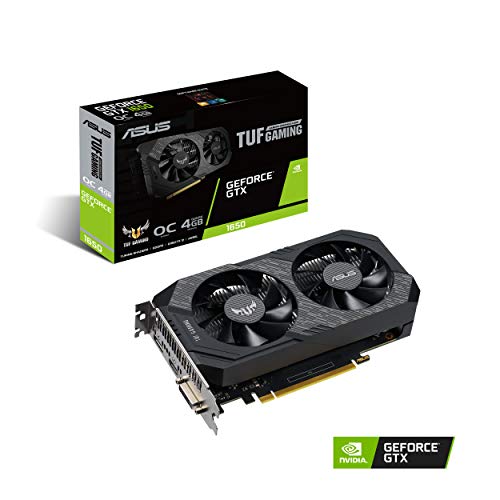
ASUS TUF Gaming GeForce GTX 1650 4GB
Best for: PCIe 3.0 GeForce GTX 1650 builds
- Interface
- PCIe 3.0 (what this guide is about)
- Graphics Processor
- GeForce GTX 1650
- Memory Size
- 4GB
- Memory Type
- GDDR6
- PCIe Interface
- PCIe 3.0
- Use
- Gaming
This ASUS card provides a dedicated PCIe 3.0 graphics solution powered by the GeForce GTX 1650 processor. It features 4GB of GDDR6 memory to deliver bandwidth for gaming tasks and supports a digital maximum resolution of 7680 x 4320. Measuring 8.11 inches in length and fitted with a protective backplate, it suits your build if you need a compact, straightforward desktop graphics card for a standard PCIe 3.0 slot.
Pros
- 4GB of GDDR6 memory
- Digital maximum resolution of 7680 x 4320
- PCIe 3.0 interface compatibility
- Integrated protective backplate
Cons
- Limited to 4GB of video memory
- Height of 1.81 inches exceeds single-slot profile dimensions
Good fit if
- You need a PCIe 3.0 card with 4GB GDDR6 memory.
- You have space in your case for an 8.11-inch graphics card.
Skip if
- You require more than 4GB of VRAM for heavy workloads.
- You need a single-slot or low-profile form factor.
Verdict: ASUS TUF GeForce GTX 1650 4GB delivers a dedicated PCIe 3.0 setup with GDDR6 memory and up to 8K digital display output. It offers reliable base gaming specifications inside an 8.11-inch dual-slot footprint.

EZDIY-FAB 20cm PCIe 3.0 GPU Riser Cable
Best for: mounting PCIe 3.0 GPUs in custom orientations
- Interface
- PCIe 3.0 (what this guide is about)
- PCIe Interface
- PCIE 3.0
- Weight
- 3.17 ounces
EZDIY-FAB 20cm PCIe 3.0 16x GPU Riser Cable is a 200mm extension cable designed for mounting your graphics card in custom orientations. It features a tinned pure copper core and EMI shielding to maintain signal stability across PCIe 3.0, 2.0, and 1.0 interfaces. Its flexible sectional design aids case airflow. This accessory suits you if you need to reposition an existing PCIe 3.0 graphics card within your chassis.
Pros
- EMI shielding reduces signal interference
- Tinned pure copper core preserves signal transmission
- Flexible sectional design supports airflow and alternate orientations
- Compatible with PCIe 3.0, 2.0, and 1.0 standards
Cons
- Does not support PCIe 4.0
- Does not provide standalone GPU processing hardware
Good fit if
- You need a 200mm extension to reposition a graphics card
- You use a motherboard and card running PCIe 3.0 or older
Skip if
- You require PCIe 4.0 data transmission
- You need a dedicated graphics processing card
Verdict: EZDIY-FAB 20cm PCIe 3.0 16x GPU Riser Cable provides flexible mounting and signal shielding for PCIe 3.0 cards. It serves as an internal extension accessory rather than an independent display adapter.

Maxsun GeForce GT 1030 Low Profile
Best for: small-form-factor PCIe 3.0 desktop builds
- Interface
- PCIe 3.0 (what this guide is about)
- Graphics Processor
- GeForce GT 1030
- Memory Size
- 2GB
- Memory Type
- GDDR5
- Boost Clock
- up to 1468 MHz
- Memory Bus Width
- 64-Bit
The Maxsun GeForce GT 1030 Low Profile is a compact graphics card designed for slim ITX and small-form-factor systems. It connects via a PCIe 3.0 interface and features 2GB of GDDR5 memory on a 64-bit bus with a 1468 MHz boost clock. You get HDMI and DVI display outputs along with an included low-profile bracket. It suits you if you need a space-saving card for compact desktop setups.
Pros
- Low-profile form factor with included low-profile bracket
- PCIe 3.0 interface with up to 1468 MHz boost clock
- GDDR5 memory operating at 6000 MHz
- Compact 6.5-inch length fits slim ITX enclosures
Cons
- Limited to 2GB VRAM capacity
- Narrow 64-bit memory bus width
- Lacks a DisplayPort output
Good fit if
- You build inside a slim ITX or small-form-factor chassis.
- You need a basic PCIe 3.0 card with HDMI and DVI outputs.
- You require an included low-profile mounting bracket.
Skip if
- You require more than 2GB of video memory.
- You need a modern DisplayPort connection.
- You want a memory bus wider than 64 bits.
Verdict: Maxsun GeForce GT 1030 Low Profile provides a space-conscious PCIe 3.0 solution with 2GB GDDR5 memory for compact enclosures. Its short 6.5-inch length and included low-profile bracket simplify small-form-factor installations.
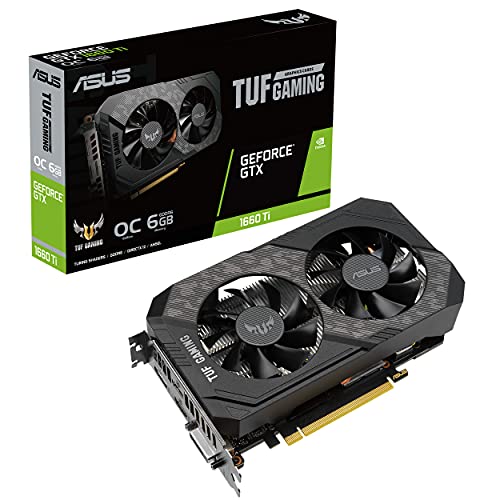
ASUS TUF Gaming GeForce GTX 1660 Ti 6GB
Best for: PCIe 3.0 gaming and OBS livestreaming
- Interface
- PCIe 3.0 (what this guide is about)
- Graphics Processor
- GeForce GTX 1660 Ti
- Memory Size
- 6GB
- Memory Type
- GDDR6
- Boost Clock
- 1845 MHz
- PCIe Interface
- PCIe 3.0
The ASUS TUF Gaming GeForce GTX 1660 Ti 6GB provides 6GB of GDDR6 memory on a PCIe 3.0 interface. It delivers memory speeds of 12 Gbps and a boost clock up to 1845 MHz in OC mode. Measuring 8.1 inches long, it fits compact builds easily. This card suits you if you need dedicated OBS hardware encoding on an existing PCIe 3.0 setup.
Pros
- 6GB GDDR6 memory running at 12 Gbps
- 1845 MHz boost clock in OC mode
- Dedicated hardware encoder optimized for OBS
- Supports digital output up to 7680 x 4320
Cons
- 6GB VRAM provides less memory than 8GB or 16GB cards
- 1.8-inch thickness occupies more than a single expansion slot
Good fit if
- You run a PCIe 3.0 system and need 6GB of GDDR6 memory.
- You broadcast video using OBS and want dedicated hardware encoding.
- You have an enclosure that accommodates an 8.1-inch card length.
Skip if
- You require more than 6GB of VRAM for larger workloads.
- You need a single-slot or low-profile card for an ultra-slim chassis.
Verdict: ASUS TUF Gaming GeForce GTX 1660 Ti 6GB offers a 1845 MHz boost clock and dedicated OBS encoding on the PCIe 3.0 interface. It delivers dependable GDDR6 speed across an 8.1-inch dual-slot design.

NVIDIA Quadro T1000 8GB Graphics Card
Best for: multi-monitor workstations requiring compact PCIe 3.0 graphics
- Interface
- PCIe 3.0 (what this guide is about)
- Graphics Processor
- Quadro T1000
- Memory Size
- 8GB
- Memory Type
- GDDR6
- Memory Bus Width
- 128 bit
- PCIe Interface
- PCI Express 3.0 x 16
The NVIDIA Quadro T1000 8GB Graphics Card pairs a PCIe 3.0 interface with 8GB of GDDR6 memory and 896 CUDA cores. Designed for compact multi-monitor setups, it delivers four Mini DisplayPort 1.4 outputs capable of driving up to four 5K displays. Measuring just under six inches long and under one inch thick, this card fits easily into space-constrained systems when you need dedicated memory and extensive display connectivity.
Pros
- 8GB GDDR6 memory
- Supports up to four 5K displays
- Four Mini DisplayPort 1.4 outputs with latching mechanism
- Compact dimensions under six inches in length
Cons
- Uses Mini DisplayPort outputs only, requiring adapters for standard cables
- Limited to 896 CUDA cores
Good fit if
- You need to drive up to four 5K displays from a single PCIe 3.0 slot.
- You require 8GB of GDDR6 memory in a slim, low-weight form factor.
Skip if
- You need standard full-size HDMI or DisplayPort connections without adapters.
- You need higher CUDA core counts for intensive parallel computing.
Verdict: NVIDIA Quadro T1000 8GB Graphics Card provides quad-display capability and 8GB of GDDR6 memory in a remarkably compact PCIe 3.0 design. It is a reliable solution if you must power multi-monitor workstations inside smaller cases.

PNY NVIDIA T1000 8GB GDDR6 Graphics Card
Best for: single-slot multi-monitor PCIe 3.0 workstations
- Interface
- PCIe 3.0 (what this guide is about)
- Graphics Processor
- NVIDIA T1000
- Memory Size
- 8 GB
- Memory Type
- GDDR6
- PCIe Interface
- PCI Express 3.0 x16
- Slot Width
- Single Slot
The PNY NVIDIA T1000 8GB GDDR6 Graphics Card is a single-slot card built for PCIe 3.0 x16 systems. It features 896 CUDA cores and GDDR6 memory in a compact 10-inch form factor that weighs under 0.9 pounds. With four Mini-DisplayPort outputs and included DisplayPort adapters, you can connect multiple displays simultaneously. It fits your setup if you require multi-monitor output and workstation graphics without filling multiple expansion slots.
Pros
- PCI-Express 3.0 x16 system interface
- 896 CUDA cores with GDDR6 memory
- Includes 4 Mini-DisplayPort to DisplayPort adapters
- Single-slot profile measuring 2.7 inches high
Cons
- Requires Mini-DisplayPort adapters for standard DisplayPort cables
- No native HDMI or DVI ports
Good fit if
- You need a single-slot card for a PCIe 3.0 x16 expansion slot.
- You want to drive up to four monitors using Mini-DisplayPort connections.
Skip if
- You need standard full-size HDMI or DisplayPort connections without adapters.
- You require more than 896 CUDA cores for heavy compute tasks.
Verdict: PNY NVIDIA T1000 8GB GDDR6 Graphics Card delivers 896 CUDA cores and four display outputs across a single-slot PCIe 3.0 footprint. It gives you flexible multi-screen connectivity without demanding extra expansion space.
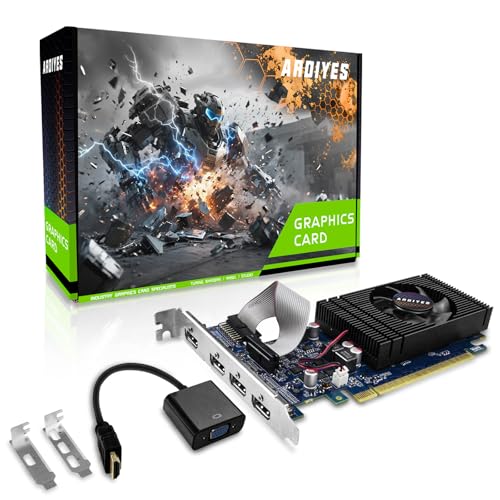
ARDIYES GT 740 4GB Low-Profile GPU
Best for: quad-monitor desktop setups in compact cases
- Interface
- PCIe 3.0 (what this guide is about)
- Graphics Processor
- GT 740
- Memory Size
- 4GB
- Memory Type
- GDDR5
- PCIe Interface
- PCIe 3.0
- Form Factor
- Low Profile
The ARDIYES GT 740 4GB Low-Profile GPU gives you a compact PCIe 3.0 expansion card designed for multi-display desktop setups. It combines 4GB of GDDR5 memory with four native HDMI ports, letting you drive up to four monitors at once. Its low-profile form factor and bundled half-height bracket suit compact chassis. This card fits your needs if you run office workstations, digital signage, or trading dashboards needing multi-screen output.
Pros
- Four HDMI ports supporting quad-monitor setups
- Low-profile design with both half-height and standard brackets included
- 4GB GDDR5 memory on a PCIe 3.0 interface
- Silent fan cooling engineered for quiet operation
Cons
- Offers only HDMI outputs with no DisplayPort connections
- Targeted at 1080p video rather than higher-resolution playback
Good fit if
- You need to connect up to four HDMI displays from a single card.
- You have a small-form-factor case requiring a low-profile bracket.
- You want quiet, hardware-accelerated 1080p multimedia playback.
Skip if
- You require native DisplayPort or DVI video outputs.
- You need more than 4GB of video memory for heavy workloads.
Verdict: ARDIYES GT 740 4GB Low-Profile GPU delivers a dedicated multi-display solution for compact systems with its four HDMI ports and PCIe 3.0 connectivity. It provides straightforward quad-monitor support and quiet cooling for office and media environments.

Empowered PC Quadro T1000 8GB Low Profile
Best for: compact multi-display workstations and CAD setups
- Interface
- PCIe 3.0 (what this guide is about)
- Graphics Processor
- Quadro T1000
- Memory Size
- 8GB
- Memory Type
- GDDR6
- PCIe Interface
- PCIe 3.0 x16
- Slot Width
- Single-Slot
This refurbished Empowered PC card runs on a PCIe 3.0 interface with 8GB of GDDR6 memory and 896 CUDA cores. Its low-profile, single-slot build operates at 50 watts, fitting compact workstation enclosures. You get support for up to four 4K displays at 60Hz or dual 8K monitors. This card suits CAD drafters, video editors, and financial professionals who need multi-monitor output and workstation certification within small-form-factor systems.
Pros
- Low-profile, single-slot design with 50W power draw
- 8GB GDDR6 memory and 896 CUDA cores
- Supports up to four 4K displays at 60Hz or dual 8K displays
- Includes both half-height and full-height brackets
Cons
- Seller-refurbished unit with light cosmetic blemishes
- Entry-level 896 CUDA core count for heavy 3D rendering
Good fit if
- You need a low-profile PCIe 3.0 card for small-form-factor systems.
- You want to drive up to four 4K displays or two 8K displays.
- You require ISV certifications for CAD and engineering software.
Skip if
- You prefer a factory-new component rather than a refurbished unit.
- You need high core counts for complex 3D workloads.
Verdict: Empowered PC Quadro T1000 8GB Low Profile delivers reliable multi-display capability and ISV CAD support in a 50W single-slot package. It provides balanced workstation utility for small systems on a PCIe 3.0 connection.

PowerColor Radeon RX 480 8GB
Best for: PCIe 3.0 setups needing multi-display outputs
- Interface
- PCIe 3.0 (what this guide is about)
- Graphics Processor
- Radeon RX 480
- Memory Size
- 8GB
- Memory Type
- GDDR5
- PCIe Interface
- PCI-Express 3.0
- Dimensions
- 12 × 5 × 1.5 inches
The PowerColor Radeon RX 480 8GB is a desktop graphics card built on the PCIe 3.0 interface. It provides 8GB of GDDR5 memory for your graphics tasks and includes one HDMI port, one DL-DVI-D port, and three DisplayPort outputs. At 12 inches long, it suits you if your computer case has ample clearance for a full-length card and your motherboard utilizes standard PCIe 3.0 connectivity.
Pros
- 8GB GDDR5 video memory
- PCIe 3.0 interface
- Five video outputs including three DisplayPorts, one HDMI, and one DL-DVI-D
Cons
- 12-inch length requires a large PC chassis
- Uses older GDDR5 memory rather than GDDR6
- Sold as a renewed product
Good fit if
- You have a PC chassis with at least 12 inches of clearance for the card length.
- You need multiple monitor outputs across DisplayPort, HDMI, and DVI.
- You want 8GB of dedicated GDDR5 memory on a PCIe 3.0 slot.
Skip if
- You have a compact or low-profile PC case.
- You require cards with newer GDDR6 memory.
Verdict: PowerColor Radeon RX 480 8GB delivers 8GB of GDDR5 memory and versatile display outputs for standard PCIe 3.0 motherboards. Its 12-inch length requires you to verify case clearance before installation.
Specifications side by side
| Spec | HP NVIDIA Quadro RTX 5000 16GB GDDR6 | ASUS TUF Gaming GeForce GTX 1650 4GB | EZDIY-FAB 20cm PCIe 3.0 GPU Riser Cable | Maxsun GeForce GT 1030 Low Profile | ASUS TUF Gaming GeForce GTX 1660 Ti 6GB | NVIDIA Quadro T1000 8GB Graphics Card | PNY NVIDIA T1000 8GB GDDR6 Graphics Card | ARDIYES GT 740 4GB Low-Profile GPU | Empowered PC Quadro T1000 8GB Low Profile | PowerColor Radeon RX 480 8GB |
|---|---|---|---|---|---|---|---|---|---|---|
| Graphics Processor | Quadro RTX 5000 | GeForce GTX 1650 | not specified | GeForce GT 1030 | GeForce GTX 1660 Ti | Quadro T1000 | NVIDIA T1000 | GT 740 | Quadro T1000 | Radeon RX 480 |
| Memory Size | 16GB | 4GB | not specified | 2GB | 6GB | 8GB | 8 GB | 4GB | 8GB | 8GB |
| Memory Type | GDDR6 | GDDR6 | not specified | GDDR5 | GDDR6 | GDDR6 | GDDR6 | GDDR5 | GDDR6 | GDDR5 |
| Boost Clock | not specified | not specified | not specified | up to 1468 MHz | 1845 MHz | not specified | not specified | not specified | not specified | not specified |
| Memory Bus Width | not specified | not specified | not specified | 64-Bit | not specified | 128 bit | not specified | not specified | not specified | not specified |
| PCIe Interface | PCIe 3.0 | PCIe 3.0 | PCIE 3.0 | PCIe 3.0 | PCIe 3.0 | PCI Express 3.0 x 16 | PCI Express 3.0 x16 | PCIe 3.0 | PCIe 3.0 x16 | PCI-Express 3.0 |
| Slot Width | not specified | not specified | not specified | not specified | not specified | not specified | Single Slot | not specified | Single-Slot | not specified |
| Memory | 16GB | 4GB | not specified | 2GB | 6GB | 8GB | 8GB | 4GB | 8GB | 8GB |
| GPU | not specified | GeForce GTX 1650 | not specified | not specified | not specified | not specified | not specified | not specified | not specified | not specified |
| Interface | PCIe 3.0 | PCIe 3.0 | PCIe 3.0 | PCIe 3.0 | PCIe 3.0 | PCIe 3.0 | PCIe 3.0 | PCIe 3.0 | PCIe 3.0 | PCIe 3.0 |
| Form Factor | not specified | not specified | not specified | Low Profile | not specified | not specified | not specified | Low Profile | Low Profile | not specified |
| Use | not specified | Gaming | not specified | not specified | Gaming | not specified | not specified | not specified | not specified | not specified |
| Dimensions | 16.3 × 10.7 × 0.96 inches | 8.11 × 4.92 × 1.81 inches | not specified | not specified | 8.1 × 4.9 × 1.8 inches | 5.91 × 4.92 × 0.98 inches | 10 × 2 × 2.7 inches | not specified | not specified | 12 × 5 × 1.5 inches |
| Weight | not specified | 1.39 pounds | 3.17 ounces | 5.93 ounces | 1.41 pounds | 2.82 ounces | 14.1 ounces | not specified | 1 pounds | 2.2 pounds |
| Length | not specified | not specified | not specified | 6.5 inches | not specified | not specified | not specified | not specified | not specified | not specified |
| Width | not specified | not specified | not specified | 2.72 inches | not specified | not specified | not specified | not specified | not specified | not specified |
| Model | 5JH81AT | TUF-GTX1650-O4GD6-P-GAMING | EZDPC150-6 | GT 1030 | TUF-GTX1660TI-O6G-EVO-GAMING | 900-5G172-2570-000 | VCNT1000-8GB-PB | not specified | not specified | not specified |
| Size | not specified | not specified | 200mm/7.87in | not specified | not specified | 8 gb | T1000 | not specified | RTX Quadro T1000 | RX 480 |
| Color | not specified | not specified | black | not specified | not specified | not specified | Black | Blue | not specified | not specified |
Is a PCIe 3.0 Graphics Card Worth It for Your System?
A PCIe 3.0 interface dictates how your graphics card communicates with your motherboard. In everyday operation, this connection standard supports hardware ranging from compact 2GB media cards to 16GB workstation adapters. It enables multiple video outputs, including quad HDMI or DisplayPort arrays, and handles gaming GPUs with dedicated OBS encoding. Choosing a PCIe 3.0 card ensures operational compatibility with standard PCIe 3.0 motherboard slots, giving you predictable display connectivity without demanding newer expansion interfaces.
Worth it if
- You need a graphics card that matches an existing PCIe 3.0 motherboard slot.
- You require quad-display outputs via HDMI or DisplayPort for multi-monitor setups.
- You want dedicated GDDR5 or GDDR6 memory ranging from 2GB up to 16GB for media, CAD, or gaming.
Skip it if
- You need a standalone display adapter rather than an internal extension accessory like a riser cable.
- You have a compact PC case that cannot accommodate cards measuring 12 to 16.33 inches in length.
To match platform bandwidth across your build, you can pair your card with the best pcie 3 0 nvme SSDs.
How We Picked These Cards
You find 10 graphics cards on this list chosen specifically for the PCIe 3.0 interface. We include a model when its Amazon listing states PCIe 3.0 compatibility in the title or published feature points. To give you focused options, we display only one variant per product family. Every detail comes strictly from published specifications; products are not physically handled.
We order these cards by placing products in stock first, then by Amazon sales rank, showing better-selling products first. This spec-based approach helps you compare memory capacity, GDDR generation, and case dimensions to find the right PCIe 3.0 card for your setup.
Key Factors for PCIe 3.0 Cards
-
Verify Hardware Type
You must verify whether a listing offers an active graphics card or a passive extension cable before you buy. Some PCIe 3.0 items provide internal connectivity rather than video processing hardware. For instance, the EZDIY-FAB 20cm PCIe 3.0 GPU Riser Cable acts solely as a flexible mounting accessory for an existing adapter. If you need dedicated graphical rendering or physical display outputs, you must ensure the product specifications list a graphics processing unit rather than a 16x riser ribbon.
-
Choose Memory Generation
You should review the memory generation specification to match your operational bandwidth needs. PCIe 3.0 graphics cards come equipped with either GDDR5 or faster GDDR6 memory chips. Cards utilizing GDDR6 memory provide higher data transfer rates across identical bus widths compared to older GDDR5 standards. The ASUS TUF Gaming GeForce GTX 1660 Ti 6GB features modern GDDR6 memory to handle asset streaming reliably. If your daily workflow relies on rapid texture streaming or real-time encoding, you should prioritize models with GDDR6 memory.
-
Check Low Profile Support
You need to evaluate the form factor specification to guarantee the card seats properly into your computer chassis. Standard-height graphics cards will not fit inside slim corporate desktops or compact entertainment centers. Choosing a dedicated low-profile design ensures the card matches reduced expansion slot heights. The Maxsun GeForce GT 1030 Low Profile includes a low-profile bracket specifically tailored for slim enclosures. If you assemble hardware inside a space-constrained chassis, you must confirm that the card explicitly lists a low-profile form factor before purchase.
-
Match Display Output Ports
You should check the quantity and variety of display ports to accommodate your current workstation monitors. Different PCIe 3.0 cards deliver varying output combinations, ranging from mixed video outputs to quad independent digital connections. For example, the ARDIYES GT 740 4GB Low-Profile GPU supplies four HDMI ports to drive multiple external screens simultaneously. If you plan to build a multi-monitor trading or media station without using active splitters, you must verify that the card natively provides sufficient matching connectors for each monitor.
-
Assess Intended Workload Use
You must match the intended GPU use classification to your primary computing tasks. Consumer gaming cards focus on rendering game engines and live video encoding, whereas workstation cards emphasize specialized CAD software compatibility and single-slot space efficiency. The PNY NVIDIA T1000 8GB GDDR6 Graphics Card features 896 CUDA cores built for professional workstations. If you operate 3D design software or precision modeling applications, you should select cards designated for workstation tasks rather than standard desktop gaming units.
-
Select Target Memory Capacity
You need to inspect the video memory capacity to prevent performance bottlenecks in memory-heavy software. Available PCIe 3.0 graphics cards span from 2GB allocations up to expansive 16GB configurations. Entry-level cards with 2GB or 4GB of memory suit basic video display and standard productivity, while professional workflows demand higher thresholds. The HP NVIDIA Quadro RTX 5000 16GB GDDR6 provides 16GB of dedicated memory for substantial datasets. You should assess the memory requirements of your heaviest software suite to pick an adequate capacity.
Frequently asked questions
Can a PCIe 3.0 graphics card work with a PCIe 4.0 motherboard?
Yes, you can install a PCIe 3.0 graphics card into a PCIe 4.0 slot. The interface is backward compatible, allowing the card to function normally. While the bandwidth is limited to PCIe 3.0 speeds, this does not prevent the hardware from operating. You will still get full access to the card's memory and display outputs without any compatibility issues.
What is the largest PCIe 3.0 graphics card on this list?
The HP NVIDIA Quadro RTX 5000 16GB is the largest card listed. It measures 16.3 inches in length and requires significant case clearance. You must verify your chassis depth before installation to ensure it fits. This workstation card provides 16GB of GDDR6 memory and quad DisplayPort connectivity for demanding tasks.
Which PCIe 3.0 card is best for small form factor builds?
The Maxsun GeForce GT 1030 Low Profile is ideal for compact systems. It features a short 6.5-inch length and includes a low-profile bracket for easy installation. This card offers 2GB of GDDR5 memory and is designed specifically for space-conscious desktop builds where standard-sized cards will not fit.
Do any PCIe 3.0 cards support four monitors simultaneously?
Several cards on this list support quad-monitor setups. The NVIDIA Quadro T1000 8GB Graphics Card provides quad-display capability for multi-monitor workstations. The PNY NVIDIA T1000 also offers four display outputs across a single-slot footprint. The ARDIYES GT 740 includes four HDMI ports for straightforward multi-screen connectivity in compact cases.
Is the EZDIY-FAB 20cm PCIe 3.0 GPU Riser Cable a graphics card?
No, it is an internal extension accessory rather than an independent display adapter. This cable provides flexible mounting and signal shielding for PCIe 3.0 cards. You use it to connect a graphics card to the motherboard when physical orientation requires an extension. It does not process video or provide display outputs on its own.
What memory capacity does the ASUS TUF Gaming GeForce GTX 1660 Ti have?
The ASUS TUF Gaming GeForce GTX 1660 Ti 6GB features 6GB of GDDR6 memory. It delivers dependable speed across an 8.1-inch dual-slot design. The card also offers a 1845 MHz boost clock and dedicated encoding for OBS livestreaming. This setup is suitable for gaming and content creation on PCIe 3.0 interfaces.
How much does the PowerColor Radeon RX 480 8GB weigh?
The PowerColor Radeon RX 480 8GB weighs 2.2 pounds. It measures 12 inches in length and requires you to verify case clearance before installation. The card delivers 8GB of GDDR5 memory and versatile display outputs for standard PCIe 3.0 motherboards. Its dimensions make it suitable for standard desktop towers.
Which card offers the most compact solution for multi-display workstations?
The NVIDIA Quadro T1000 8GB Graphics Card offers a remarkably compact design for multi-display needs. It measures 5.91 inches in length and provides quad-display capability. This card includes 8GB of GDDR6 memory and is reliable for powering multi-monitor workstations inside smaller cases. It balances compact size with essential workstation connectivity.