Best Graphics Cards with Pcie 4.0 in 2026: 15 Picks Ranked by Specs
As an Amazon Associate we earn from qualifying purchases. Links on this page are affiliate links.
Choosing a graphics card with pcie 40 ensures high-speed data transfer across compatible motherboard slots. The EVGA GeForce RTX 3090 24GB leads our rankings because it delivers 24GB of GDDR6X memory and 10,496 CUDA cores for demanding setups.
We compared 15 models based entirely on the specifications published on the listings, focusing on memory capacity, clock speeds, and hardware dimensions. This guide helps you decide which card fits your case clearance, display configurations, and overall hardware needs.
Quick picks
The best fit for you
- You want the highest VRAM capacity for gaming EVGA GeForce RTX 3090 24GB It features 24GB of GDDR6X memory and 10,496 CUDA cores on a PCIe 4.0 interface.
- You are building a specialized BTF motherboard PC ASUS TUF RTX 4070 Ti Super BTF White This card provides 16GB of GDDR6X memory engineered specifically for compatible BTF motherboards.
- You need 12GB VRAM in a small case ASUS Phoenix GeForce RTX 3060 12GB It fits 12GB of GDDR6 memory into a compact 7-inch chassis length.
- You need to drive four displays with PCIe 4.0 ZOTAC GeForce RTX 3070 Twin Edge OC 8GB It provides four video outputs alongside a 1755 MHz boost clock.
Our 15 picks

EVGA GeForce RTX 3090 24GB
Best for: maximum VRAM capacity and heavy gaming
- Interface
- PCIe 4.0 (what this guide is about)
- Graphics Processor
- GeForce RTX 3090
- Memory Size
- 24GB
- Memory Type
- GDDR6X
- Boost Clock
- 1800MHz
- PCIe Interface
- PCIe 4
The EVGA GeForce RTX 3090 24GB is a dedicated gaming graphics card built on the PCIe 4.0 interface. It provides 24GB of GDDR6X memory, 10,496 CUDA cores, and an 1800MHz boost clock with three cooling fans. If you want maximum memory headroom and high core counts for demanding visual workloads or gaming, this card gives you the hardware resources you need for your PCIe 4.0 system.
Pros
- 24GB of high-speed GDDR6X memory
- 10,496 CUDA cores with an 1800MHz boost clock
- PCIe 4.0 interface support
- Triple-fan cooling system with ARGB lighting
Cons
- Long 11.81-inch card length demands a spacious case
- Weighs 2.5 pounds, adding significant load to the expansion slot
Good fit if
- You need 24GB of VRAM for memory-intensive rendering or gaming.
- You have a PC chassis that fits an 11.81-inch card.
- You run a motherboard equipped with a PCIe 4.0 expansion slot.
Skip if
- You have a compact case with less than 11.81 inches of clearance.
- You only need a modest frame buffer for light gaming tasks.
Verdict: EVGA GeForce RTX 3090 24GB stands out on our 2026 list of 15 cards by pairing 24GB of GDDR6X memory with 10,496 CUDA cores on a PCIe 4.0 interface. It offers the highest memory and core specifications for demanding setups.

ZOTAC GeForce RTX 3070 Twin Edge OC 8GB
Best for: quad-display setups needing PCIe 4.0 Ampere performance
- Interface
- PCIe 4.0 (what this guide is about)
- Graphics Processor
- GeForce RTX 3070
- Memory Size
- 8GB
- Memory Type
- GDDR6
- Boost Clock
- 1755 MHz
- Memory Bus Width
- 256-bit
The ZOTAC GeForce RTX 3070 Twin Edge OC 8GB provides a PCIe 4.0 connection alongside an 8GB 256-bit GDDR6 memory configuration running at 14 Gbps. It features an Ampere GPU with a 1755 MHz boost clock, IceStorm 2.0 cooling, and four display outputs including HDMI 2.1 and DisplayPort 1.4a. You get solid mid-tier graphics bandwidth if you run multi-monitor or 8K displays on a modern PCIe 4.0 motherboard.
Pros
- Boost clock reaches 1755 MHz
- 256-bit memory bus with 14 Gbps GDDR6
- Supports four displays via HDMI 2.1 and three DisplayPort 1.4a connections
- IceStorm 2.0 cooling with FREEZE Fan Stop and active fan control
Cons
- VRAM capacity is limited to 8GB
- Uses GDDR6 memory rather than faster GDDR6X
- Logo lighting is restricted to white LED only
Good fit if
- You need a PCIe 4.0 card capable of driving up to four displays simultaneously.
- You want HDMI 2.1 and 8K support on a 256-bit memory bus.
Skip if
- You require more than 8GB of video memory for heavy workloads.
- You want customizable RGB illumination instead of static white lighting.
Verdict: ZOTAC GeForce RTX 3070 Twin Edge OC 8GB delivers standard PCIe 4.0 throughput paired with a 1755 MHz boost clock and four video outputs. It offers balanced Ampere performance for setups that do not demand more than 8GB of GDDR6 memory.

ASUS TUF RTX 4070 Ti Super BTF White
Best for: BTF motherboard builds needing 16GB GDDR6X memory
- Interface
- PCIe 4.0 (what this guide is about)
- Graphics Processor
- GeForce RTX 4070 Ti Super
- Memory Size
- 16GB
- Memory Type
- GDDR6X
- PCIe Interface
- PCIe 4.0
- Use
- Gaming
ASUS TUF RTX 4070 Ti Super BTF White gives you a PCIe 4.0 interface and 16GB of GDDR6X memory for gaming setups. It features a factory overclocked core and a white finish. Note that this specific model requires a BTF motherboard for installation. If you plan a clean-cable build centered on a compatible BTF board and need high-speed GDDR6X memory, this card matches your layout requirements directly.
Pros
- PCIe 4.0 interface
- 16GB GDDR6X memory
- Factory overclocked edition
- White color design
Cons
- Requires a BTF motherboard
- Card dimensions not specified in published data
Good fit if
- You have a BTF motherboard designed for hidden-connector graphics cards.
- You want 16GB of GDDR6X video memory on a PCIe 4.0 bus.
- You are assembling an all-white gaming PC.
Skip if
- You use a traditional motherboard without BTF connector support.
- You need exact physical dimensions to confirm case clearance.
Verdict: ASUS TUF RTX 4070 Ti Super BTF White provides 16GB of GDDR6X memory and PCIe 4.0 connectivity for specialized BTF builds. It delivers fast memory and factory-overclocked speeds if your motherboard supports the BTF layout.

MSI GeForce RTX 3060 Ventus 12GB
Best for: PCIe 4.0 gaming with 12GB VRAM
- Interface
- PCIe 4.0 (what this guide is about)
- Graphics Processor
- GeForce RTX 3060
- Memory Size
- 12GB
- Memory Type
- GDDR6
- Boost Clock
- 1807MHz
- Memory Bus Width
- 192-bit
This MSI GeForce RTX 3060 graphics card connects via a PCIe 4.0 interface to provide 12GB of GDDR6 memory running on a 192-bit bus. You get an 1807 MHz boost clock alongside 15 Gbps memory speed for gaming setups. Dual TORX 3.0 fans manage thermal output, stopping completely under light loads with Zero Frozr technology. It suits you if you need dependable performance with ample video memory and four display outputs.
Pros
- 12GB GDDR6 memory on a 192-bit interface
- PCIe 4.0 connectivity
- 1807 MHz boost clock and 15 Gbps memory speed
- Three DisplayPort outputs and one HDMI port supporting 4K at 120Hz
- Zero Frozr stops fans during low-load periods
Cons
- Single HDMI port limits multi-HDMI display configurations
- Narrower 192-bit bus compared to 256-bit or 384-bit designs
Good fit if
- You need 12GB of GDDR6 memory for PCIe 4.0 gaming builds.
- You run up to four displays using DisplayPort and HDMI.
- You want quiet operation with fans that stop under low load.
Skip if
- You require more than one native HDMI connection.
- You need a wider 256-bit or 384-bit memory bus.
Verdict: MSI GeForce RTX 3060 12GB Graphics Card delivers a 1807 MHz boost clock, PCIe 4.0 connectivity, and 12GB of GDDR6 memory for gaming setups. Its TORX 3.0 cooling system and Zero Frozr mode maintain quiet thermal control.

ASUS Dual GeForce RTX 4060 8GB
Best for: compact PC builds requiring PCIe 4.0
- Interface
- PCIe 4.0 (what this guide is about)
- Graphics Processor
- GeForce RTX 4060
- Memory Size
- 8GB
- Memory Type
- GDDR6
- PCIe Interface
- PCIe 4.0
- Slot Width
- 2-Slot
The ASUS Dual GeForce RTX 4060 8GB is a PCIe 4.0 graphics card designed for compact setups. It features 8GB of GDDR6 memory, DLSS 3 support, and a 2-slot footprint measuring 7.96 inches long. Connectivity options include HDMI 2.1a and DisplayPort 1.4a video outputs. If you need a card weighing 1.2 pounds that fits smaller cases, this model matches your build.
Pros
- PCIe 4.0 interface
- Compact 7.96-inch length
- HDMI 2.1a and DisplayPort 1.4a outputs
- DLSS 3 support
Cons
- Limited to 8GB GDDR6 memory capacity
- Uses GDDR6 rather than faster GDDR6X memory
Good fit if
- You need a card under 8 inches long for a smaller chassis.
- You want HDMI 2.1a and DisplayPort 1.4a display connectivity.
- You require a PCIe 4.0 card with an 8GB memory configuration.
Skip if
- You need more than 8GB of video memory for your workloads.
- You require higher-bandwidth GDDR6X memory.
Verdict: ASUS Dual GeForce RTX 4060 8GB delivers PCIe 4.0 connectivity and DLSS 3 support in a compact 7.96-inch form factor. It provides modern display outputs and a light footprint for space-constrained computer cases.

ASUS ROG Strix RTX 3080 OC 10GB
Best for: PCIe 4.0 systems needing GDDR6X gaming performance
- Interface
- PCIe 4.0 (what this guide is about)
- Graphics Processor
- GeForce RTX 3080
- Memory Size
- 10GB
- Memory Type
- GDDR6X
- PCIe Interface
- PCIe 4.0
- Slot Width
- 2.9-Slot
The ASUS ROG Strix RTX 3080 10GB is a dedicated graphics card designed for gaming setups using a PCIe 4.0 interface. It pairs 10GB of GDDR6X memory with factory-overclocked clock speeds. Measuring 12.5 inches long and 2.3 inches thick, it requires a spacious desktop chassis. This card suits you if you want GDDR6X memory bandwidth and PCIe 4.0 connectivity for modern PC gaming.
Pros
- PCIe 4.0 interface support
- 10GB of high-speed GDDR6X memory
- Factory overclocked edition
Cons
- Card length of 12.5 inches requires significant chassis space
- 10GB memory capacity is lower than 12GB or 24GB alternatives
Good fit if
- You have a PC chassis that clears 12.5 inches of card length.
- You want GDDR6X memory on a PCIe 4.0 motherboard.
Skip if
- You need more than 10GB of VRAM for heavy workloads.
- You use a compact case that cannot fit a 2.3-inch thick card.
Verdict: ASUS ROG Strix RTX 3080 10GB delivers PCIe 4.0 connectivity and fast GDDR6X memory for demanding gaming setups. Its 12.5-inch length requires a chassis with sufficient internal clearance.
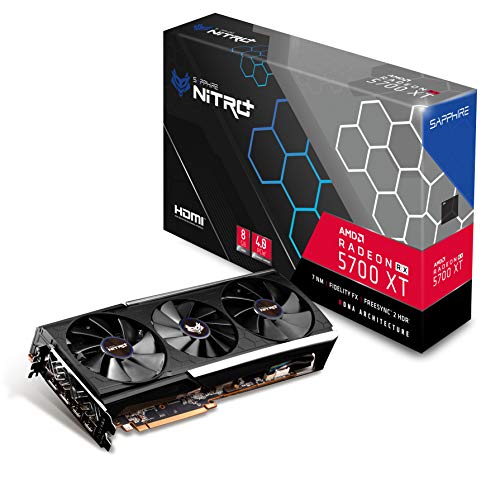
Sapphire NITRO+ Radeon RX 5700 XT 8GB
Best for: PCIe 4.0 multi-display desktop setups
- Interface
- PCIe 4.0 (what this guide is about)
- Graphics Processor
- Radeon RX 5700 XT
- Memory Size
- 8GB
- Memory Type
- GDDR6
- PCIe Interface
- PCIe 4.0
- Dimensions
- 17 × 9.5 × 3.5 inches
The Sapphire Radeon NITRO+ RX 5700 XT 8GB is a desktop graphics card built on the PCIe 4.0 interface. It provides 8GB of GDDR6 memory alongside dual HDMI and dual DisplayPort connections for multiple monitor setups. At 17 inches in length and 9.5 inches wide, you need a spacious PC case. This card suits you if you want a dedicated PCIe 4.0 board with balanced multi-display video outputs.
Pros
- PCIe 4.0 bus interface
- 8GB GDDR6 video memory
- Dual HDMI and dual DisplayPort connections
- Factory overclocked with UEFI support
Cons
- Large card footprint measuring 17 inches long and 9.5 inches wide
- 8GB memory capacity is lower than 12GB or 24GB alternatives
Good fit if
- You have a full-size computer case that accommodates a 17-inch card length.
- You need both dual HDMI and dual DisplayPort outputs for your monitors.
- You want an 8GB GDDR6 configuration using the PCIe 4.0 interface.
Skip if
- You have a compact PC case that cannot clear 17 inches of length and 3.5 inches of height.
- You need more than 8GB of video memory for your software.
Verdict: Sapphire Radeon NITRO+ RX 5700 XT 8GB delivers PCIe 4.0 connectivity and four video outputs across dual HDMI and DisplayPort standards. It provides 8GB of GDDR6 memory for users who have ample case clearance.

ZOTAC Gaming GeForce RTX 3090 24GB
Best for: heavy gaming needing massive VRAM capacity
- Interface
- PCIe 4.0 (what this guide is about)
- Graphics Processor
- GeForce RTX 3090
- Memory Size
- 24GB
- Memory Type
- GDDR6X
- Memory Bus Width
- 384-bit
- PCIe Interface
- PCIE 4.0
The ZOTAC GeForce RTX 3090 24GB is a high-end desktop graphics card built for gaming over a PCIe 4.0 interface. It pairs the GeForce RTX 3090 processor with 24GB of GDDR6X memory running on a 384-bit bus at 19.5 Gbps. This setup suits you if you need massive video memory and fast bandwidth for heavy graphical workloads, provided your computer case can accommodate its large physical dimensions.
Pros
- 24GB of GDDR6X video memory
- Wide 384-bit memory bus
- 19.5 Gbps memory speed
- PCIe 4.0 interface support
Cons
- Large physical dimensions require substantial case clearance
- No video output ports specified in the data
Good fit if
- You need 24GB of GDDR6X memory for demanding gaming setups.
- You have a PC case that fits components measuring over 16 inches long.
- You have a motherboard with a PCIe 4.0 slot.
Skip if
- You have a compact or small-form-factor PC case.
- You require verified display output port specifications before buying.
Verdict: ZOTAC GeForce RTX 3090 24GB delivers massive 24GB GDDR6X memory and PCIe 4.0 connectivity for premium gaming builds. It provides high memory bandwidth, though its large footprint demands plenty of case space.
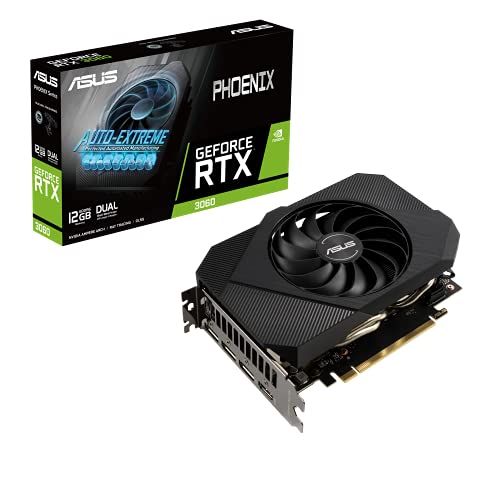
ASUS Phoenix GeForce RTX 3060 12GB
Best for: compact desktop builds needing 12GB VRAM
- Interface
- PCIe 4.0 (what this guide is about)
- Graphics Processor
- GeForce RTX 3060
- Memory Size
- 12GB
- Memory Type
- GDDR6
- PCIe Interface
- PCIe 4.0
- Use
- Gaming
This graphics card pairs an NVIDIA GeForce RTX 3060 processor with 12GB of GDDR6 memory on a PCIe 4.0 interface. At 7 inches long and 0.75 pounds, it fits smaller desktop builds easily. You get dedicated HDMI and DisplayPort 1.4a outputs for your display setup. It suits you if you need a compact gaming card with substantial memory capacity for standard system cases.
Pros
- 12GB GDDR6 video memory
- PCIe 4.0 bus interface
- Compact 7-inch length and 0.75-pound weight
- DisplayPort 1.4a and HDMI connectivity
Cons
- Uses standard GDDR6 rather than GDDR6X memory
- Offers only one HDMI and one DisplayPort connection
Good fit if
- You need a 7-inch card to fit into space-limited PC cases.
- You want 12GB of GDDR6 memory for gaming workloads.
Skip if
- You need faster GDDR6X memory speeds.
- You run multi-monitor setups requiring more video ports.
Verdict: ASUS Phoenix GeForce RTX 3060 12GB delivers PCIe 4.0 connectivity and 12GB VRAM in a compact 7-inch chassis. It offers a solid, space-efficient option for smaller desktop systems.

ZOTAC GeForce RTX 3060 Twin Edge 12GB
Best for: compact PC cases needing 12GB VRAM
- Interface
- PCIe 4.0 (what this guide is about)
- Graphics Processor
- GeForce RTX 3060
- Memory Size
- 12GB
- Memory Type
- GDDR6
- Memory Bus Width
- 192-bit
- PCIe Interface
- PCIe 4.0
The ZOTAC Twin Edge RTX 3060 12GB is a dedicated gaming graphics card built on the PCIe 4.0 interface. It pairs a GeForce RTX 3060 processor with 12GB of GDDR6 memory across a 192-bit bus running at 15 Gbps. Measuring 8.8 inches long, it suits you if your PC case requires a compact card that still delivers substantial video memory and modern interface bandwidth for gaming setups.
Pros
- PCIe 4.0 interface support
- 12GB GDDR6 memory capacity
- Compact 8.8-inch card length
- 15 Gbps memory speed on a 192-bit bus
Cons
- Uses standard GDDR6 instead of faster GDDR6X memory
- 192-bit memory bus is narrower than 256-bit or 384-bit options
- Display output types and counts are not listed in the specifications
Good fit if
- You need a graphics card under 9 inches long for a smaller enclosure.
- You want 12GB of VRAM running on a PCIe 4.0 motherboard.
- You run gaming workloads suited to a GeForce RTX 3060 GPU.
Skip if
- You require the higher data bandwidth of a 256-bit or 384-bit memory bus.
- You need detailed display port specifications confirmed before buying.
Verdict: ZOTAC Twin Edge RTX 3060 12GB delivers 12GB of GDDR6 memory and PCIe 4.0 connectivity inside an 8.8-inch card design. It gives you solid core specifications for space-conscious gaming builds.

ASUS Dual AMD Radeon RX 6600 XT 8GB
Best for: compact 8GB PCIe 4.0 gaming builds
- Interface
- PCIe 4.0 (what this guide is about)
- Graphics Processor
- Radeon RX 6600 XT
- Memory Size
- 8GB
- Memory Type
- GDDR6
- PCIe Interface
- PCIe 4.0
- Use
- Gaming
The ASUS Dual Radeon RX 6600 XT 8GB is a dedicated gaming graphics card built on AMD RDNA 2 architecture. It connects across a PCIe 4.0 interface and supplies 8GB of GDDR6 memory for your gaming setup. Measuring 9.6 inches long, 5.3 inches wide, and 1.9 inches thick, this unit weighs 0.75 pounds. It suits you if you want a compact PCIe 4.0 gaming card with standard memory.
Pros
- PCIe 4.0 system interface
- 8GB GDDR6 video memory
- Compact 9.6-inch total length
- Lightweight build at 0.75 pounds
Cons
- 8GB memory capacity limits headroom relative to 12GB or 24GB alternatives
- Uses standard GDDR6 rather than faster GDDR6X memory
Good fit if
- You need a PCIe 4.0 card that fits cases with 9.6 inches of clearance.
- You want an 8GB GDDR6 graphics card built for gaming.
- You prefer a lightweight card weighing under one pound.
Skip if
- You need more than 8GB of video memory for heavy workloads.
- You require cards built with faster GDDR6X memory modules.
Verdict: ASUS Dual Radeon RX 6600 XT 8GB delivers PCIe 4.0 connectivity and 8GB of GDDR6 memory in a manageable 9.6-inch format. It is a practical fit if you want a lightweight gaming card without oversized chassis requirements.

ASUS Dual GeForce RTX 4070 OC
Best for: mid-tier PCIe 4.0 gaming builds
- Interface
- PCIe 4.0 (what this guide is about)
- Graphics Processor
- GeForce RTX 4070 Super
- Memory Size
- 12GB
- Memory Type
- GDDR6X
- PCIe Interface
- PCIe 4.0
- Slot Width
- 2.56-Slot
The ASUS Dual GeForce RTX 4070 12GB pairs NVIDIA graphics architecture with a PCIe 4.0 interface. You get 12GB of GDDR6X video memory along with HDMI 2.1 and DisplayPort video outputs. At 10.51 inches long and 2.1 pounds, this card requires adequate case clearance. It suits you if you need a current-generation GPU with DLSS 3 support for gaming on a PCIe 4.0 system.
Pros
- 12GB GDDR6X video memory
- High-speed PCIe 4.0 interface
- Native HDMI 2.1 and DisplayPort connectivity
- Hardware support for DLSS 3
Cons
- Memory capacity limited to 12GB
- Length exceeds 10.5 inches
Good fit if
- You run a PCIe 4.0 motherboard and need 12GB of GDDR6X memory.
- You want DLSS 3 support alongside HDMI 2.1 connectivity.
Skip if
- You require more than 12GB of video memory for your workloads.
- You have a compact enclosure that cannot fit a 10.51-inch card.
Verdict: ASUS Dual GeForce RTX 4070 12GB delivers PCIe 4.0 connectivity and 12GB GDDR6X memory in a 10.51-inch footprint. It provides essential DLSS 3 architecture and HDMI 2.1 output for compatible desktop builds.

MSI GeForce RTX 3060 Triple Fan 12GB
Best for: gamers wanting 12GB VRAM and triple-fan cooling
- Interface
- PCIe 4.0 (what this guide is about)
- Graphics Processor
- GeForce RTX 3060
- Memory Size
- 12GB
- Memory Type
- GDDR6
- Boost Clock
- 1807 MHz
- Memory Bus Width
- 192-Bit
This MSI card pairs a GeForce RTX 3060 graphics processor with a PCIe 4.0 interface and 12GB of GDDR6 memory on a 192-bit bus. It operates with an 1807 MHz boost clock and a 15 Gbps memory speed. A triple-fan cooler with Zero Frozr technology keeps the 12.4-inch card quiet when thermal demands are low. It suits you if you need generous video memory and multi-display output across three DisplayPort connections and one HDMI port.
Pros
- 12GB GDDR6 memory on a 192-bit bus
- PCIe 4.0 bus interface
- Triple TORX 3.0 fans with Zero Frozr silent mode
- Three DisplayPort 1.4a outputs and one HDMI 2.1 port
Cons
- Long 12.4-inch card size restricts smaller chassis options
- Provides only one HDMI port
Good fit if
- You have clearance in your PC case for a 12.4-inch card.
- You want 12GB of VRAM running on a PCIe 4.0 slot.
- You run multi-monitor setups using up to three DisplayPort connections.
Skip if
- You build inside a compact small-form-factor case.
- You require more than one HDMI display connection.
Verdict: MSI GeForce RTX 3060 12GB Triple Fan delivers ample VRAM and quiet low-load cooling over a PCIe 4.0 connection. Its 12.4-inch length requires a spacious enclosure, but the triple-fan setup and 1807 MHz boost clock supply dependable hardware capability.
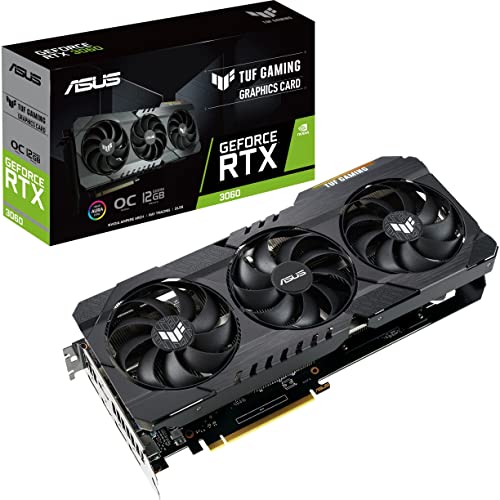
ASUS TUF Gaming GeForce RTX 3060 OC 12GB
Best for: Gaming builds needing 12GB GDDR6 memory
- Interface
- PCIe 4.0 (what this guide is about)
- Graphics Processor
- GeForce RTX 3060
- Memory Size
- 12GB
- Memory Type
- GDDR6
- Boost Clock
- 1882 MHz
- PCIe Interface
- PCIe 4.0
The ASUS TUF Gaming RTX 3060 12GB OC uses the PCIe 4.0 interface and provides 12GB of GDDR6 memory. Powered by NVIDIA Ampere architecture, it reaches a boost clock of 1882 MHz in OC mode and 1852 MHz in Gaming mode. Featuring 2nd generation RT cores and 3rd generation Tensor cores, this graphics card suits you if you need dependable hardware for dedicated gaming setups.
Pros
- 12GB of GDDR6 memory
- PCIe 4.0 interface support
- Up to 1882 MHz boost clock in OC mode
- SafeSlot reinforced metal PCIe retention
Cons
- Default Gaming mode clock is set lower at 1852 MHz
- Peak 1882 MHz speed requires activating OC mode
Good fit if
- You want a PCIe 4.0 graphics card with 12GB GDDR6 memory.
- You prefer cards with reinforced PCIe slot retention.
Skip if
- You need more than 12GB of onboard video memory.
- You want peak clock speeds without using an OC software mode.
Verdict: ASUS TUF Gaming RTX 3060 12GB OC combines 12GB GDDR6 memory with PCIe 4.0 connectivity and factory clock profiles up to 1882 MHz. It delivers balanced gaming specs and durable slot reinforcement for your build.

ASUS TUF Gaming GeForce RTX 4070 Ti 12GB
Best for: PCIe 4.0 gaming with GDDR6X memory
- Interface
- PCIe 4.0 (what this guide is about)
- Graphics Processor
- GeForce RTX 4070 Ti
- Memory Size
- 12GB
- Memory Type
- GDDR6X
- PCIe Interface
- PCIe 4.0
- Use
- Gaming
The ASUS TUF Gaming GeForce RTX 4070 Ti is a dedicated desktop graphics card built for PCIe 4.0 motherboards. It pairs NVIDIA's GeForce RTX 4070 Ti graphics processor with 12GB of high-speed GDDR6X memory. For video output, the card includes DisplayPort 1.4a and HDMI 2.1a ports. It suits you if you need modern gaming performance, fast video memory, and standard PCIe 4.0 connectivity for your system.
Pros
- PCIe 4.0 interface
- 12GB GDDR6X memory
- HDMI 2.1a and DisplayPort 1.4a outputs
- GeForce RTX 4070 Ti GPU
Cons
- 12GB VRAM is lower than 24GB options on the list
- Card weight exceeds 3.5 pounds
Good fit if
- You need a PCIe 4.0 card with fast GDDR6X memory for gaming.
- You want HDMI 2.1a and DisplayPort 1.4a display connections.
Skip if
- You require 16GB or 24GB of video memory for your software.
- You need a lightweight graphics card under 3 pounds.
Verdict: ASUS TUF Gaming GeForce RTX 4070 Ti delivers balanced performance with 12GB of GDDR6X memory and PCIe 4.0 support. It provides modern display connectivity through HDMI 2.1a and DisplayPort 1.4a.
Specifications side by side
| Spec | EVGA GeForce RTX 3090 24GB | ZOTAC GeForce RTX 3070 Twin Edge OC 8GB | ASUS TUF RTX 4070 Ti Super BTF White | MSI GeForce RTX 3060 Ventus 12GB | ASUS Dual GeForce RTX 4060 8GB | ASUS ROG Strix RTX 3080 OC 10GB | Sapphire NITRO+ Radeon RX 5700 XT 8GB | ZOTAC Gaming GeForce RTX 3090 24GB | ASUS Phoenix GeForce RTX 3060 12GB | ZOTAC GeForce RTX 3060 Twin Edge 12GB | ASUS Dual AMD Radeon RX 6600 XT 8GB | ASUS Dual GeForce RTX 4070 OC | MSI GeForce RTX 3060 Triple Fan 12GB | ASUS TUF Gaming GeForce RTX 3060 OC 12GB | ASUS TUF Gaming GeForce RTX 4070 Ti 12GB |
|---|---|---|---|---|---|---|---|---|---|---|---|---|---|---|---|
| Graphics Processor | GeForce RTX 3090 | GeForce RTX 3070 | GeForce RTX 4070 Ti Super | GeForce RTX 3060 | GeForce RTX 4060 | GeForce RTX 3080 | Radeon RX 5700 XT | GeForce RTX 3090 | GeForce RTX 3060 | GeForce RTX 3060 | Radeon RX 6600 XT | GeForce RTX 4070 Super | GeForce RTX 3060 | GeForce RTX 3060 | GeForce RTX 4070 Ti |
| Memory Size | 24GB | 8GB | 16GB | 12GB | 8GB | 10GB | 8GB | 24GB | 12GB | 12GB | 8GB | 12GB | 12GB | 12GB | 12GB |
| Memory Type | GDDR6X | GDDR6 | GDDR6X | GDDR6 | GDDR6 | GDDR6X | GDDR6 | GDDR6X | GDDR6 | GDDR6 | GDDR6 | GDDR6X | GDDR6 | GDDR6 | GDDR6X |
| Boost Clock | 1800MHz | 1755 MHz | not specified | 1807MHz | not specified | not specified | not specified | not specified | not specified | not specified | not specified | not specified | 1807 MHz | 1882 MHz | not specified |
| Memory Bus Width | not specified | 256-bit | not specified | 192-bit | not specified | not specified | not specified | 384-bit | not specified | 192-bit | not specified | not specified | 192-Bit | not specified | not specified |
| PCIe Interface | PCIe 4 | PCIE 4.0 | PCIe 4.0 | PCIe 4 | PCIe 4.0 | PCIe 4.0 | PCIe 4.0 | PCIE 4.0 | PCIe 4.0 | PCIe 4.0 | PCIe 4.0 | PCIe 4.0 | PCIe 4 | PCIe 4.0 | PCIe 4.0 |
| Slot Width | not specified | not specified | not specified | not specified | 2-Slot | 2.9-Slot | not specified | not specified | not specified | not specified | not specified | 2.56-Slot | not specified | not specified | not specified |
| Memory | 24GB | 8GB | 16GB | 12GB | 8GB | not specified | 8GB | 24GB | 12GB | 12GB | 8GB | 12GB | 12GB | 12GB | 12GB |
| GPU | GeForce RTX 3090 | not specified | not specified | GeForce RTX 3060 | not specified | not specified | not specified | GeForce RTX 3090 | GeForce RTX 3060 | GeForce RTX 3060 | not specified | GeForce RTX 4070 | GeForce RTX 3060 | GeForce RTX 3060 | GeForce RTX 4070 Ti |
| Interface | PCIe 4.0 | PCIe 4.0 | PCIe 4.0 | PCIe 4.0 | PCIe 4.0 | PCIe 4.0 | PCIe 4.0 | PCIe 4.0 | PCIe 4.0 | PCIe 4.0 | PCIe 4.0 | PCIe 4.0 | PCIe 4.0 | PCIe 4.0 | PCIe 4.0 |
| Use | Gaming | Gaming | Gaming | Gaming | not specified | Gaming | not specified | Gaming | Gaming | Gaming | Gaming | not specified | Gaming | Gaming | Gaming |
| Dimensions | 11.8 × 5.38 × 0.1 inches | not specified | not specified | not specified | 7.96 × 4.73 × 0.1 inches | 16 × 9.2 × 3.5 inches | 17 × 9.5 × 3.5 inches | 16.8 × 11.5 × 4 inches | not specified | 8.8 × 4.6 × 1.5 inches | 9.6 × 5.3 × 1.9 inches | not specified | 12.4 × 1.7 × 4.7 inches | 5 × 5 × 5 inches | not specified |
| Weight | 2.5 pounds | not specified | 2.87 pounds | 12 ounces | 1.2 pounds | 12 ounces | not specified | not specified | 12 ounces | not specified | 12 ounces | 2.1 pounds | not specified | 12 ounces | 3.53 pounds |
| Length | not specified | not specified | not specified | 9.25 inches | not specified | not specified | not specified | not specified | 7 inches | not specified | not specified | 10.5 inches | not specified | not specified | 5.43 inches |
| Width | not specified | not specified | not specified | 4.88 inches | not specified | not specified | not specified | not specified | 5 inches | not specified | not specified | 5.27 inches | not specified | not specified | 2.56 inches |
| Size | not specified | not specified | RTX4070Ti Super|OC|Only support BTF MB | RTX | RTX4060|V2|OC | 2.3"x5.5"x12.5" | 8 | not specified | 2"x5"x7" | not specified | 1.9"x5.3"x9.6" | RTX4070|OC|Black | RTX | not specified | Standard Edition |
| Color | not specified | not specified | White | not specified | BLACK | BLACK | not specified | not specified | not specified | not specified | not specified | BLACK | not specified | not specified | Black |
| Model | not specified | not specified | not specified | MSI GeForce RTX 3060 VENTUS 2X 12G OC | not specified | not specified | not specified | not specified | not specified | not specified | not specified | not specified | not specified | TUF-RTX3060-O12G-V2-GAMING | not specified |
Is a PCIe 4.0 Graphics Card Worth It?
A PCIe 4.0 interface connects your graphics card directly to your motherboard slot. Across all 15 cards, this interface pairs with diverse memory configurations, ranging from 8GB GDDR6 options to 24GB GDDR6X setups. It also supports architectures featuring modern display outputs like HDMI 2.1a and DisplayPort 1.4a, as well as features like DLSS 3. If you run a modern motherboard, choosing a PCIe 4.0 card ensures your hardware connects over its native bus specification. This interface is standard across compact builds, multi-display configurations, and specialized BTF layouts.
Worth it if
- You have a motherboard designed for PCIe 4.0 hardware and want native slot compatibility.
- You want modern features like DLSS 3 architecture, HDMI 2.1a connectivity, or up to 24GB of GDDR6X memory.
Skip it if
- You use a system that lacks a compatible PCIe 4.0 motherboard slot.
- You select a specialized BTF model without a motherboard that supports the BTF layout.
How We Picked These Cards
To select cards for this guide, we filter for models featuring a PCIe 4.0 interface stated directly in their published specifications or product titles. We include only one variant per product family to give you a clear comparison of distinct models. Every detail comes purely from published manufacturer data, and we do not physically handle or test the hardware.
We rank the 15 options by in-stock availability first, then by Amazon sales rank so better-selling products appear first. From there, you can compare key specifications across our 2026 list. We focus on memory capacity, memory type like GDDR6 or GDDR6X, GPU models, and dimensions to help you find the right fit.
Choosing the Right PCIe Graphics Card
-
Evaluate Video Memory Capacity
Check the onboard VRAM pool listed in the specifications. Modern cards feature memory allocations ranging between 8GB and 24GB. An 8GB configuration handles standard workloads, while 12GB setups give you extra headroom for asset-heavy gaming. If your tasks involve massive texture files or complex datasets, look for a 24GB pool like the one found on the EVGA GeForce RTX 3090 24GB. Matching video memory capacity to your exact display resolutions and graphical asset demands avoids running out of local frame buffer memory during intensive sessions.
-
Compare GDDR6 and GDDR6X
Pay close attention to the memory generation indicated in the spec sheet. Standard GDDR6 memory appears on models designed for balanced daily operation and mainstream gaming. In contrast, GDDR6X memory provides higher data transmission rates, making it suitable for demanding processing loads. For example, the ASUS ROG Strix RTX 3080 OC 10GB specifies GDDR6X memory to increase overall data throughput across the board. If your workflow prioritizes faster memory access speeds over standard memory efficiency, verify that the card lists GDDR6X rather than baseline GDDR6 memory.
-
Check Motherboard Layout Compatibility
Verify whether a graphics card relies on proprietary slot standards before completing your selection. While most models attach to conventional PCIe slots, specialized designs require specific motherboard hardware. The ASUS TUF RTX 4070 Ti Super BTF White, for instance, explicitly requires a BTF motherboard layout to supply power without traditional top-mounted cables. If you own a standard motherboard, selecting a BTF-only model will prevent successful installation. Always check the interface and form-factor specifications to confirm the graphics card physically fits and connects to your specific motherboard ecosystem.
-
Inspect Monitor Output Ports
Review the display output configurations listed for each graphics card to match your external monitors. Cards feature different port assortments, including DisplayPort and HDMI jacks. If you run multiple monitors simultaneously, confirm the total port count directly supports your setup. For instance, the Sapphire NITRO+ Radeon RX 5700 XT 8GB provides four video outputs across dual HDMI and dual DisplayPort connectors. Checking the connector types in advance ensures your monitors plug in directly without requiring separate adapters or active conversion cables for multi-display desktop arrangements.
-
Examine Factory Boost Clocks
Check the factory boost clock frequencies specified by each manufacturer. While base hardware remains identical within a specific GPU model line, factory-tuned options offer elevated frequencies. For instance, the ASUS TUF Gaming GeForce RTX 3060 OC 12GB lists boost clock profiles reaching up to 1882 MHz, whereas baseline variants run at lower frequencies. If you want maximum out-of-the-box core performance without manual adjustments, compare published boost clock ratings. Selecting a card with higher published clock profiles ensures the GPU delivers faster core processing speeds under full gaming loads.
Frequently asked questions
Can a PCIe 4.0 graphics card run in an older PCIe 3.0 motherboard slot?
Yes, a PCIe 4.0 graphics card functions in an older PCIe 3.0 motherboard slot. The PCI Express specification maintains backward compatibility across hardware generations. Your card automatically operates at PCIe 3.0 transfer rates without needing specialized adapters. While the interface bandwidth matches the older slot speed, cards like the ZOTAC GeForce RTX 3070 Twin Edge OC 8GB retain their core operating clock speeds and onboard display output functions.
What kind of display outputs do PCIe 4.0 graphics cards provide?
PCIe 4.0 graphics cards typically feature combinations of HDMI and DisplayPort connections. For example, the Sapphire NITRO+ Radeon RX 5700 XT 8GB provides four total outputs split between dual HDMI and DisplayPort standards. Newer cards such as the ASUS TUF Gaming GeForce RTX 4070 Ti supply modern HDMI 2.1a and DisplayPort 1.4a interfaces. These specifications allow you to run multi-monitor arrangements directly from the card.
What is the difference between GDDR6 and GDDR6X on PCIe 4.0 cards?
GDDR6X provides higher memory bandwidth than standard GDDR6 memory on PCIe 4.0 cards. Premium options like the EVGA GeForce RTX 3090 24GB and ASUS TUF RTX 4070 Ti Super BTF White use GDDR6X to accelerate data transfer between the GPU core and VRAM. In contrast, cards like the MSI GeForce RTX 3060 Ventus 12GB use standard GDDR6 memory, which satisfies general rendering requirements without demanding extreme bandwidth.
Are there compact PCIe 4.0 graphics cards for smaller PC cases?
Yes, several PCIe 4.0 graphics cards feature compact dimensions specifically engineered for small enclosures. The ASUS Phoenix GeForce RTX 3060 12GB measures just 7 inches long, while the ASUS Dual GeForce RTX 4060 8GB comes in at 7.96 inches. These short dimensions let you install modern PCIe 4.0 hardware into tight chassis configurations where larger cards exceeding 12 inches cannot physically clear internal drive cages or radiators.
What motherboard requirements exist for BTF PCIe 4.0 graphics cards?
BTF graphics cards require a motherboard specifically built with matching BTF slot connections. The ASUS TUF RTX 4070 Ti Super BTF White relies on this specialized layout to receive power directly through the board rather than conventional top-mounted cables. If your system uses a standard motherboard layout, this card will not seat or function properly. You must verify BTF compatibility before pairing this specific card with your setup.
What cooling configurations do PCIe 4.0 graphics cards use?
PCIe 4.0 graphics cards use varied fan arrangements based on their size and thermal demands. Models like the MSI GeForce RTX 3060 Ventus 12GB utilize TORX 3.0 fans and Zero Frozr technology for low-load operation. Larger options like the MSI GeForce RTX 3060 Triple Fan 12GB incorporate a three-fan thermal system across a 12.4-inch chassis. These cooling systems help manage GPU temperatures during sustained computing and gaming workloads.