NVIDIA Graphics Cards: 15 Picks Ranked by Specs
As an Amazon Associate we earn from qualifying purchases. Links on this page are affiliate links.
Choosing an NVIDIA graphics card requires matching physical dimensions and memory to your system. NVIDIA provides hardware across diverse form factors, ranging from compact low-profile cards under six inches to full-size options exceeding 14 inches. The lineup includes both GeForce desktop models and dedicated Quadro workstation hardware.
The NVIDIA GeForce RTX 3090 Founders Edition Renewed leads the list because it delivers a full 12-inch platform for spacious desktop builds requiring RTX 3090 hardware. This guide compares 15 products based strictly on specifications published on the listings, helping you choose the right fit for your chassis and workflow.
Quick picks
Our 15 picks

NVIDIA GeForce RTX 3090 Founders Edition Renewed
Best for: spacious desktop builds requiring RTX 3090 hardware
- Graphics Processor
- GeForce RTX 3090
- Dimensions
- 12 × 6 × 3 inches
View on Amazon: NVIDIA GeForce RTX 3090 Founders Edition Renewed
This renewed NVIDIA GeForce RTX 3090 Founders Edition is a dedicated desktop video card built for intensive graphical workloads. It measures 12 inches long, 6 inches wide, and 3 inches high, so you need a case with substantial clearance. With a package weight of 6.0 pounds, this card suits you if you run a full-sized chassis and prioritize GeForce RTX 3090 processing.
Pros
- GeForce RTX 3090 graphics processing unit
- Substantial 12-inch length provides a large physical footprint
- Standard single-unit desktop video card packaging
Cons
- Renewed unit rather than brand-new condition
- Large 12 by 6 by 3 inch dimensions demand ample chassis space
- Memory capacity and clock speeds not listed in specifications
Good fit if
- You have a full-size computer case that fits a 12-inch graphics card.
- You want a GeForce RTX 3090 GPU in a renewed condition.
Skip if
- You use a compact chassis unable to accommodate a 3-inch-thick card.
- You want a brand-new component rather than a renewed model.
Verdict: NVIDIA GeForce RTX 3090 Founders Edition Renewed delivers a full-sized GeForce RTX 3090 platform measuring 12 inches in length. It suits you if your chassis can accommodate its three-inch height and substantial footprint.

NVIDIA GeForce GTX 1080 8GB Founders Edition
Best for: 8GB GDDR5X renewed desktop builds
- Graphics Processor
- GeForce GTX 1080
- Memory Size
- 8GB
- Memory Type
- GDDR5X
- Length
- 10.7 inches
- Width
- 3.7 inches
- Weight
- 12 ounces
View on Amazon: NVIDIA GeForce GTX 1080 8GB Founders Edition
This renewed NVIDIA GeForce GTX 1080 Founders Edition is a dedicated desktop graphics card equipped with 8GB of GDDR5X memory. Measuring 10.7 inches long and weighing 0.75 pounds, it fits standard computer cases that support full-length expansion cards. If you need a functional 8GB GPU for everyday computing and older workloads without requiring modern architecture updates, this card provides essential video processing hardware in a renewed package.
Pros
- 8GB GDDR5X memory configuration
- Lightweight design at 0.75 pounds
- Founders Edition form factor measuring 10.7 inches long
Cons
- Supplied as a renewed hardware unit
- Card length of 10.7 inches requires adequate chassis clearance
Good fit if
- You need an 8GB GDDR5X graphics card for your setup.
- You have a PC case with at least 10.7 inches of clearance for the GPU.
- You are comfortable purchasing renewed computer components.
Skip if
- You prefer factory-new hardware rather than a renewed product.
- You have a compact case that cannot accommodate a 10.7-inch card.
Verdict: NVIDIA GeForce GTX 1080 Founders Edition 8GB offers 8GB of GDDR5X memory in a standard 10.7-inch renewed package. It suits builds that need dedicated graphics memory without demanding modern generation hardware.

NVIDIA Quadro P1000 4GB
Best for: basic 4GB dedicated graphics workloads
- Graphics Processor
- Quadro P1000
- Memory Size
- 4GB
The NVIDIA Quadro P1000 graphics card provides a dedicated NVIDIA GPU paired with 4GB of video memory. You get dedicated processing power from the Quadro P1000 chip to handle display tasks and graphics workloads directly on your system. This card suits you if you need a simple NVIDIA graphics unit with 4GB of memory for an existing desktop setup, keeping your computing demands straightforward and focused on essential visual output.
Pros
- Dedicated NVIDIA Quadro P1000 GPU
- 4GB of video memory
- Official NVIDIA hardware
Cons
- 4GB capacity is lower than 8GB and 16GB options on this list
- Display output types and port counts are not specified in the data
- Core clock speeds and memory bandwidth are not listed
Good fit if
- You need a dedicated Quadro P1000 GPU for standard visual tasks.
- You require a card with 4GB of video memory for basic computing needs.
Skip if
- You require more than 4GB of video memory for heavy workloads.
- You need detailed port specifications confirmed before purchasing.
Verdict: NVIDIA Quadro P1000 4GB Graphics Card delivers a dedicated Quadro P1000 GPU and 4GB of memory for everyday visual tasks. It serves as a practical choice when you need dedicated NVIDIA hardware without high memory overhead.

NVIDIA Quadro P1000 4GB Graphics Card
Best for: multi-display productivity setups needing four video outputs
- Graphics Processor
- Quadro P1000
- Memory Size
- 4GB
- Memory Type
- GDDR5
The NVIDIA Quadro P1000 4GB Graphics Card delivers workstation-focused display outputs in a compact profile. You get 4GB of GDDR5 memory and a Quadro P1000 GPU designed for tasks like Iray and MentalRay rendering. With four mini DisplayPort 1.4 connectors and NVIDIA Mosaic support, it suits your multi-monitor productivity setup if you need to run several external displays from a single card without requiring heavy 3D rendering power.
Pros
- Four mini DisplayPort 1.4 connectors with audio support
- 4GB of dedicated GDDR5 memory
- Hardware support for NVIDIA Mosaic and nView desktop management
- Compatible with NVIDIA Iray and MentalRay rendering
Cons
- Relies entirely on mini DisplayPort connections rather than standard DisplayPort or HDMI
- Uses GDDR5 memory rather than newer memory generations
- Limited to 4GB memory capacity
Good fit if
- You need to drive up to four monitors using mini DisplayPort 1.4 connections.
- You rely on NVIDIA Mosaic or nView software for managing multi-screen desktop workspaces.
- You run applications that utilize NVIDIA Iray or MentalRay.
Skip if
- You need full-size HDMI or standard DisplayPort ports without adapters.
- You require more than 4GB of VRAM for larger rendering or computing tasks.
Verdict: NVIDIA Quadro P1000 4GB Graphics Card provides reliable multi-display output via four mini DisplayPort 1.4 ports for dedicated productivity workspaces. It is a solid choice if your focus is desktop management across multiple monitors rather than high VRAM capacity.

NVIDIA Quadro RTX 8000 Graphics Card
Best for: heavy workstation builds requiring Quadro hardware
- Graphics Processor
- NVIDIA Quadro RTX 8000
- Weight
- 5 pounds
The NVIDIA Quadro RTX 8000 Graphics Card is an enterprise-oriented card from NVIDIA designed for dedicated workstations. At 5 pounds, it is a substantial unit that requires solid system mounting inside your PC case. This model suits you if you specifically need an official NVIDIA Quadro RTX8000 option for your setup and your computer case can support its 5-pound weight without structural issues.
Pros
- Official NVIDIA Quadro RTX8000 model
- Sturdy 5-pound construction
- Workstation-oriented NVIDIA hardware
Cons
- Heavy 5-pound weight needs adequate case support
- Memory specifications are not listed in the data
Good fit if
- You want an official NVIDIA Quadro RTX8000 model.
- You have a PC tower capable of supporting a 5-pound card.
Skip if
- You need a lightweight card for a small form factor build.
- You require published port and memory specifications before buying.
Verdict: NVIDIA Quadro RTX 8000 Graphics Card provides a 5-pound enterprise build designed for professional workstations.
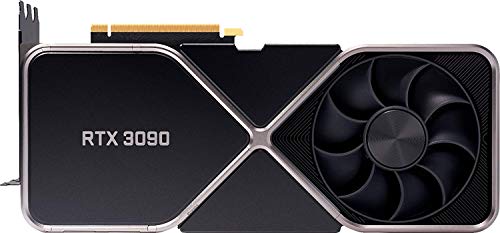
NVIDIA GeForce RTX 3090 Founders Edition 24GB
Best for: users needing 24GB GDDR6X VRAM capacity
- Graphics Processor
- NVIDIA GeForce RTX 3090
- Memory Size
- 24GB
- Memory Type
- GDDR6X
- Memory Bus Width
- 384-bit
- Dimensions
- 12 × 6 × 3 inches
View on Amazon: NVIDIA GeForce RTX 3090 Founders Edition 24GB
The NVIDIA GeForce RTX 3090 Founders Edition 24GB is a desktop graphics card equipped with the GeForce RTX 3090 chipset. It features 24GB of GDDR6X video memory across a 384-bit memory interface. You get three DisplayPort 1.4a outputs and one HDMI 2.1 port for displays. At 12 inches long and 3 inches thick, this unit suits you if you require large VRAM capacity inside a full-size case.
Pros
- 24GB of GDDR6X video memory
- Wide 384-bit memory interface
- Four display outputs including three DisplayPort 1.4a and one HDMI 2.1
Cons
- Large physical footprint measuring 12 inches long by 3 inches high
- Card width requires 6 inches of clearance
Good fit if
- You need 24GB of GDDR6X video memory for high-capacity computing tasks.
- You have a PC chassis that fits a 12-inch long, 3-inch thick graphics card.
- You run a multi-display setup using DisplayPort 1.4a or HDMI 2.1.
Skip if
- You have a compact case unable to accommodate a 12-inch card.
- You require legacy video outputs like DVI or VGA.
Verdict: NVIDIA GeForce RTX 3090 Founders Edition 24GB provides 24GB GDDR6X memory on a 384-bit bus interface. Its 12-inch length and 3-inch thickness require a full-sized chassis.
NVIDIA GeForce RTX 3070 Ti 8GB GDDR6X
Best for: PCIe 4.0 systems with ample clearance
- Graphics Processor
- GeForce RTX 3070 Ti
- Memory Size
- 8GB
- Memory Type
- GDDR6X
- PCIe Interface
- PCI Express 4.0
- Length
- 14.2 inches
- Width
- 6.69 inches
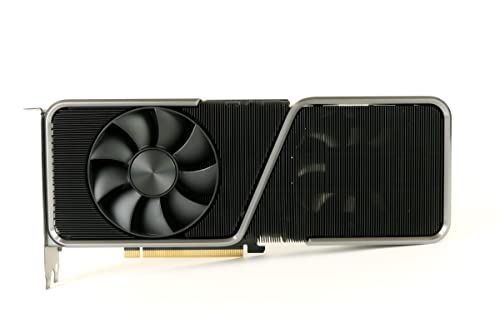
The NVIDIA GeForce RTX 3070 Ti features 8GB of high-speed GDDR6X memory and operates on the PCI Express 4.0 interface. Built with a Dark Platinum and Black finish, this graphics card measures 14.17 inches in length. It suits you if you need fast GDDR6X memory bandwidth and a PCIe 4.0 connection for your desktop setup, provided your computer case has sufficient internal clearance for its 14.17-inch length.
Pros
- 8GB GDDR6X video memory
- PCI Express 4.0 interface
- Dark Platinum and Black exterior
Cons
- 14.17-inch length requires a very deep computer case
- 8GB memory capacity limits larger memory-heavy workloads
Good fit if
- You want high-bandwidth GDDR6X memory with a PCIe 4.0 connection.
- You have a PC chassis with space for a 14.17-inch card.
Skip if
- You need more than 8GB of video memory for your software.
- You use a compact desktop case that cannot accommodate long GPUs.
Verdict: NVIDIA GeForce RTX 3070 Ti 8GB GDDR6X delivers fast memory bandwidth and PCIe 4.0 compatibility in a Dark Platinum and Black package. It is a solid pick if your desktop chassis has room for its 14.17-inch length.

NVIDIA RTX A4000 16GB ECC GPU
Best for: PCIe 4.0 systems needing ECC memory
- Graphics Processor
- RTX A4000
- Memory Size
- 16GB
- Memory Type
- GDDR6
- PCIe Interface
- PCIe 4.0 x16
- Dimensions
- 13 × 7.09 × 1.97 inches
- Weight
- 1.32 pounds
The NVIDIA RTX A4000 16GB Graphics Card provides professional-grade workstation hardware built on a PCI Express 4.0 x16 interface. You receive 16GB of GDDR6 memory with error-correcting code support to protect critical workloads against memory corruption. With four DisplayPort 1.4 outputs and NVIDIA Mosaic2 support, you can drive multi-display configurations directly. It measures 13 inches long, making it a capable option when you need high-bandwidth PCIe 4.0 connectivity and reliable data integrity.
Pros
- PCI Express 4.0 x16 graphics interface
- 16GB GDDR6 memory with error-correcting code
- Four DisplayPort 1.4 video outputs
- HDCP 2.2 and NVIDIA Mosaic2 technology support
Cons
- 13-inch length requires significant internal clearance
- No native HDMI outputs provided
Good fit if
- You need 16GB of GDDR6 ECC memory for error-sensitive computing.
- You run up to four displays using DisplayPort 1.4 connections.
- You have a motherboard with an available PCIe 4.0 x16 slot.
Skip if
- You require native HDMI ports for your monitors.
- You use a compact case that cannot accommodate a 13-inch card length.
Verdict: NVIDIA RTX A4000 16GB Graphics Card pairs a PCIe 4.0 x16 interface with 16GB of ECC GDDR6 memory for dependable workstation tasks. Its four DisplayPort 1.4 outputs make it a solid choice for multi-monitor productivity setups.

NVIDIA Quadro T1000 8GB Graphics Card
Best for: compact multi-display PCIe 3.0 workstations
- Graphics Processor
- Quadro T1000
- Memory Size
- 8GB
- Memory Type
- GDDR6
- Memory Bus Width
- 128 bit
- PCIe Interface
- PCI Express 3.0 x 16
- Dimensions
- 5.91 × 4.92 × 0.98 inches
The NVIDIA Quadro T1000 8GB Graphics Card is a compact workstation GPU built for multi-display setups. It features 8GB of GDDR6 memory, 896 CUDA cores, and a PCIe 3.0 interface. Measuring under six inches long, it fits tight enclosures easily. You get four Mini DisplayPort 1.4 ports capable of driving four 5K displays simultaneously. It suits you if you need reliable multi-monitor support without requiring upgraded motherboard PCIe slots.
Pros
- 8GB GDDR6 memory
- Supports up to four 5K displays
- Four Mini DisplayPort 1.4 ports with latching mechanism
- Compact length under 6 inches
- Three-year warranty coverage
Cons
- PCIe 3.0 interface rather than newer generations
- Mini DisplayPort outputs require adapters for full-size cables
- Lower compute capacity with 896 CUDA cores
Good fit if
- You need to drive up to four 5K screens from one card.
- You have a compact system with a PCIe 3.0 slot.
- You run DirectX 12 workflows requiring 8GB GDDR6 VRAM.
Skip if
- You require full-size DisplayPort or HDMI ports directly on the bracket.
- You need a high-bandwidth PCIe 4.0 interface.
Verdict: NVIDIA Quadro T1000 8GB Graphics Card delivers four-display output in a compact PCIe 3.0 form factor. It gives you 8GB of GDDR6 memory and DirectX 12 support for multi-monitor workstations.

NVIDIA GeForce RTX 3090 Ti Founders Edition
Best for: full-size PC builds with ample clearance
- Graphics Processor
- GeForce RTX 3090 Ti
- Dimensions
- 12 × 4 × 0.1 inches
The NVIDIA GeForce RTX 3090 Ti Founders Edition is a desktop graphics card built for dedicated gaming and workstation setups. Its physical specifications measure 12 inches in length and 4 inches in width, so you need sufficient chassis space before installation. With a listed profile height of 0.1 inches, this card fits standard slot layouts. It suits you if you want official Founders Edition hardware and possess a case designed for full-length graphics components.
Pros
- 12-inch overall card length
- 4-inch width profile
- Founders Edition design by NVIDIA
Cons
- 12-inch length requires a large chassis with ample clearance
- Memory, clock speed, and port specifications not detailed in published data
Good fit if
- You have a PC chassis that fits a 12-inch long graphics card.
- You want an original NVIDIA Founders Edition model.
Skip if
- You use a compact or small-form-factor case with limited clearance.
- You need verified memory and power connector specifications upfront.
Verdict: NVIDIA GeForce RTX 3090 Ti Founders Edition delivers an official 12-inch reference design for builders with ample chassis clearance. It provides full-size hardware dimensions for systems built to accommodate a 4-inch wide card.
NVIDIA GeForce RTX 4080 16GB GDDR6X
Best for: high-resolution rendering and ray-traced workloads
- Graphics Processor
- NVIDIA GeForce RTX 4080
- Memory Size
- 16GB
- Memory Type
- GDDR6X
- Boost Clock
- 2.51 GHz
- PCIe Interface
- PCI Express 4.0
- Dimensions
- 12 × 4.84 × 2.38 inches
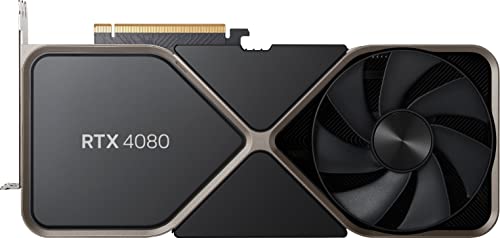
The NVIDIA GeForce RTX 4080 16GB Graphics Card delivers high-end computing power for demanding graphics setups. It features 9,728 CUDA cores paired with 16GB of GDDR6X memory and reaches a boost clock speed of 2.51 GHz. It supports PCIe 4.0 interfaces alongside DirectX 12 Ultimate and Vulkan RT APIs. This card suits you if you need dedicated ray tracing hardware and fast memory for heavy rendering or gaming workloads.
Pros
- 9,728 CUDA cores for parallel computing
- 16GB GDDR6X high-speed memory
- 2.51 GHz boost clock speed
- Hardware-level dedicated ray tracing cores
Cons
- Large card footprint at 11.97 inches in length
- Thickness of 2.38 inches occupies substantial slot space
Good fit if
- You need 16GB of GDDR6X memory for memory-intensive tasks.
- You have a PC case with clearance for an 11.97-inch card.
- You utilize applications running DirectX 12 Ultimate or Vulkan RT APIs.
Skip if
- You use a compact chassis unable to fit an 11.97-inch GPU.
- You require a card that takes up less than 2.38 inches of vertical height.
Verdict: NVIDIA GeForce RTX 4080 16GB Graphics Card provides substantial computing capability with 9,728 CUDA cores and 16GB of GDDR6X memory. It serves well in builds that accommodate its nearly 12-inch physical length.
NVIDIA RTX A2000 Low Profile
Best for: compact workstation enclosures needing Ampere architecture
- Graphics Processor
- RTX A2000
- Form Factor
- Low Profile
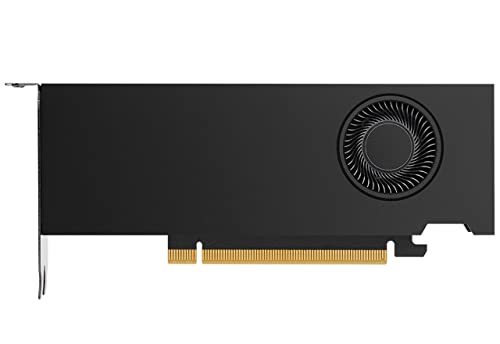
The NVIDIA RTX A2000 Low Profile provides workstation-class graphics based on NVIDIA Ampere architecture in a compact footprint. It features a dedicated low-profile form factor designed to fit slim or small-form-factor desktop enclosures. If you need Ampere generation technology for compact workstation setups where standard full-height graphics boards cannot physically fit, this model gives you a targeted hardware option for your space-constrained build.
Pros
- Low-profile form factor fits compact computer cases
- Built on NVIDIA Ampere architecture
- Dedicated RTX A2000 series workstation hardware
Cons
- Video memory capacity not specified in published data
- Display output types and port counts not listed
Good fit if
- You require a low-profile graphics card for a compact chassis.
- You want workstation hardware built on Ampere architecture.
Skip if
- You need confirmed video memory specs before purchasing.
- You need standard full-height expansion bracket dimensions.
Verdict: NVIDIA RTX A2000 Low Profile provides Ampere architecture in a compact form factor designed for slim workstation enclosures.

NVIDIA GeForce RTX 4070 Founders Edition 12GB
Best for: Balanced 12GB GDDR6X desktop setups
- Graphics Processor
- GeForce RTX 4070
- Memory Size
- 12GB
- Memory Type
- GDDR6X
- Boost Clock
- 2.48 GHz
- PCIe Interface
- PCI Express 4.0
- Dimensions
- 9.6 × 4.4 × 0.1 inches
View on Amazon: NVIDIA GeForce RTX 4070 Founders Edition 12GB
The NVIDIA GeForce RTX 4070 Founders Edition 12GB is a desktop GPU equipped with 5,888 CUDA cores and a 2.48 GHz boost clock. You get 12GB of GDDR6X video memory alongside dedicated ray tracing and Tensor cores. It operates on a PCI Express 4.0 interface and supplies HDMI and DisplayPort outputs. This setup suits you if you want current-generation architecture in a 9.6-inch chassis profile for your build.
Pros
- 5,888 CUDA cores with a 2.48 GHz boost clock
- 12GB of fast GDDR6X memory
- PCI Express 4.0 interface with backward compatibility for PCIe 3.0
- 9.6-inch card length fits standard cases
Cons
- 12GB VRAM pool is smaller than 16GB or 24GB alternatives
- Total port count and revision details are omitted in specifications
Good fit if
- You need 12GB of GDDR6X memory for modern workloads.
- You have a PC case clearance of at least 9.6 inches.
- You want 5,888 CUDA cores with a 2.48 GHz boost clock.
Skip if
- You require 16GB or more VRAM for high-capacity memory tasks.
- You need legacy display connections without adapters.
Verdict: NVIDIA GeForce RTX 4070 Founders Edition 12GB delivers 5,888 CUDA cores and a 2.48 GHz boost clock in a 9.6-inch design. It provides a balanced 12GB GDDR6X configuration for PCIe 4.0 desktop systems.

NVIDIA GeForce RTX 4070 Super 12GB
Best for: systems needing 12GB GDDR6X memory
- Graphics Processor
- GeForce RTX 4070 Super
- Memory Size
- 12GB
- Memory Type
- GDDR6X
- Length
- 9.61 inches
- Width
- 9.61 inches
The NVIDIA GeForce RTX 4070 Super 12GB is a graphics card from NVIDIA. It features 12GB of GDDR6X memory for graphics workloads. The card measures 9.61 inches long and 9.61 inches wide in a titanium and black finish. This hardware suits you if you need modern GDDR6X memory capacity for desktop tasks. You get high-speed VRAM in a standard length.
Pros
- 12GB memory capacity
- High-speed GDDR6X memory type
- 9.61-inch card length
- Titanium and black exterior finish
Cons
- Lower VRAM capacity than 16GB or 24GB models
- Clock speeds and video outputs not specified in listing
Good fit if
- You need 12GB of fast GDDR6X video memory.
- You have a PC chassis that fits a 9.61-inch card.
Skip if
- You require 16GB or more VRAM for your applications.
- You need manufacturer-specified display port counts before buying.
Verdict: NVIDIA GeForce RTX 4070 Super 12GB provides 12GB of GDDR6X memory in a 9.61-inch format. It offers balanced memory specs without taking up excess case length.

NVIDIA GeForce RTX 4080 Super 16GB
Best for: high-resolution gaming and intensive 3D rendering
- Graphics Processor
- GeForce RTX 4080 SUPER
- Memory Size
- 16GB
- Memory Type
- GDDR6X
- Boost Clock
- 2.55 GHz
- PCIe Interface
- PCI Express 4.0
- Length
- 12.2 inches
The NVIDIA GeForce RTX 4080 Super 16GB is a dedicated graphics card built for high-demand computing and gaming. It features 10,240 CUDA cores, a 2.55 GHz boost clock, and 16GB of GDDR6X memory on a PCI Express 4.0 interface. This card suits you if you need fast processing power for demanding software, 4th Gen Tensor Cores, and 3rd Gen Ray Tracing support across DirectX 12 Ultimate and Vulkan RT platforms.
Pros
- 10,240 CUDA cores for heavy compute tasks
- 16GB GDDR6X memory
- 2.55 GHz boost clock speed
- Supports PCI Express 4.0 and PCIe 3.0
Cons
- Card length of 12.2 inches requires a spacious chassis
- Specific video output connectors are not specified in the data
Good fit if
- You want 10,240 CUDA cores and a 2.55 GHz boost clock for graphic rendering.
- You have a case with at least 12.3 inches of clearance for the card.
Skip if
- You need a compact graphics card for a small-form-factor case.
- You require more than 16GB of on-board memory for your projects.
Verdict: NVIDIA GeForce RTX 4080 Super 16GB delivers 10,240 CUDA cores and a 2.55 GHz boost clock for demanding graphics workloads. Its 12.2-inch footprint requires ample chassis space, but you get fast GDDR6X memory and modern ray-tracing tech.
Specifications side by side
| Spec | NVIDIA GeForce RTX 3090 Founders Edition Renewed | NVIDIA GeForce GTX 1080 8GB Founders Edition | NVIDIA Quadro P1000 4GB | NVIDIA Quadro P1000 4GB Graphics Card | NVIDIA Quadro RTX 8000 Graphics Card | NVIDIA GeForce RTX 3090 Founders Edition 24GB | NVIDIA GeForce RTX 3070 Ti 8GB GDDR6X | NVIDIA RTX A4000 16GB ECC GPU | NVIDIA Quadro T1000 8GB Graphics Card | NVIDIA GeForce RTX 3090 Ti Founders Edition | NVIDIA GeForce RTX 4080 16GB GDDR6X | NVIDIA RTX A2000 Low Profile | NVIDIA GeForce RTX 4070 Founders Edition 12GB | NVIDIA GeForce RTX 4070 Super 12GB | NVIDIA GeForce RTX 4080 Super 16GB |
|---|---|---|---|---|---|---|---|---|---|---|---|---|---|---|---|
| Graphics Processor | GeForce RTX 3090 | GeForce GTX 1080 | Quadro P1000 | Quadro P1000 | NVIDIA Quadro RTX 8000 | NVIDIA GeForce RTX 3090 | GeForce RTX 3070 Ti | RTX A4000 | Quadro T1000 | GeForce RTX 3090 Ti | NVIDIA GeForce RTX 4080 | RTX A2000 | GeForce RTX 4070 | GeForce RTX 4070 Super | GeForce RTX 4080 SUPER |
| Memory Size | not specified | 8GB | 4GB | 4GB | not specified | 24GB | 8GB | 16GB | 8GB | not specified | 16GB | not specified | 12GB | 12GB | 16GB |
| Memory Type | not specified | GDDR5X | not specified | GDDR5 | not specified | GDDR6X | GDDR6X | GDDR6 | GDDR6 | not specified | GDDR6X | not specified | GDDR6X | GDDR6X | GDDR6X |
| Boost Clock | not specified | not specified | not specified | not specified | not specified | not specified | not specified | not specified | not specified | not specified | 2.51 GHz | not specified | 2.48 GHz | not specified | 2.55 GHz |
| Memory Bus Width | not specified | not specified | not specified | not specified | not specified | 384-bit | not specified | not specified | 128 bit | not specified | not specified | not specified | not specified | not specified | not specified |
| PCIe Interface | not specified | not specified | not specified | not specified | not specified | not specified | PCI Express 4.0 | PCIe 4.0 x16 | PCI Express 3.0 x 16 | not specified | PCI Express 4.0 | not specified | PCI Express 4.0 | not specified | PCI Express 4.0 |
| Memory | not specified | 8GB | not specified | 4GB | not specified | not specified | 8GB | 16GB | 8GB | not specified | 16GB | not specified | not specified | 12GB | 16GB |
| GPU | GeForce RTX 3090 | not specified | Quadro P1000 | Quadro P1000 | not specified | GeForce RTX 3090 | not specified | not specified | not specified | not specified | GeForce RTX 4080 | not specified | GeForce RTX 4070 | not specified | not specified |
| Interface | not specified | not specified | not specified | not specified | not specified | not specified | not specified | PCIe 4.0 | PCIe 3.0 | not specified | not specified | not specified | not specified | not specified | not specified |
| Form Factor | not specified | not specified | not specified | not specified | not specified | not specified | not specified | not specified | not specified | not specified | not specified | Low Profile | not specified | not specified | not specified |
| Dimensions | 12 × 6 × 3 inches | not specified | not specified | not specified | not specified | 12 × 6 × 3 inches | not specified | 13 × 7.09 × 1.97 inches | 5.91 × 4.92 × 0.98 inches | 12 × 4 × 0.1 inches | 12 × 4.84 × 2.38 inches | not specified | 9.6 × 4.4 × 0.1 inches | not specified | not specified |
| Length | not specified | 10.7 inches | not specified | not specified | not specified | not specified | 14.2 inches | not specified | not specified | not specified | not specified | not specified | not specified | 9.61 inches | 12.2 inches |
| Width | not specified | 3.7 inches | not specified | not specified | not specified | not specified | 6.69 inches | not specified | not specified | not specified | not specified | not specified | not specified | 9.61 inches | 5.51 inches |
| Weight | not specified | 12 ounces | not specified | not specified | 5 pounds | not specified | not specified | 1.32 pounds | 2.82 ounces | not specified | not specified | not specified | not specified | not specified | not specified |
| Model | RTX3090 | GTX-1080-FE | R27V4 | G7T21 | NVIDIA Quadro RTX8000 | RTX 3090 | PG143A | 900-5G190-2500-000 | 900-5G172-2570-000 | 9001G1362505000 | 900-1G136-2560-000 | not specified | 900-1G141-2544-000 | not specified | 900-1G136-2530-000 |
| Size | not specified | not specified | not specified | not specified | not specified | not specified | not specified | not specified | 8 gb | not specified | not specified | not specified | not specified | not specified | not specified |
The NVIDIA Lineup at a Glance
For compute-heavy rendering and ray tracing, you need fast GDDR6X memory. High-end cards like the NVIDIA GeForce RTX 4080 Super 16GB offer 10,240 CUDA cores, while the NVIDIA GeForce RTX 3090 Founders Edition 24GB supplies a 24GB capacity on a 384-bit bus interface. These desktop models feature lengths of 12 inches or more, suiting spacious chassis configurations.
For multi-display productivity and error checking, workstation hardware suits you better. The NVIDIA RTX A4000 16GB ECC GPU pairs 16GB of ECC GDDR6 memory with a PCIe 4.0 interface and four DisplayPort 1.4 outputs. If you use a PCIe 3.0 system, the NVIDIA Quadro T1000 8GB Graphics Card provides four-display output and 8GB of GDDR6 memory in a compact 5.9-inch design.
Where NVIDIA Hardware Fits Your Build
You can match this NVIDIA range to widely different desktop sizes. Card lengths run from the 5.91-inch Quadro T1000 and low-profile RTX A2000 to the 14.17-inch GeForce RTX 3070 Ti. Thickness reaches up to 3 inches on the RTX 3090. Memory options span 4GB GDDR5 to 24GB GDDR6X across dark platinum or black enclosures. You should note clear specification gaps. None of the listed models provide RGB lighting features. You will also find no entry-level options below 4GB of memory, no capacities between 16GB and 24GB, and no physical card lengths between six and nine inches.
While you balance GPU compute specs for your setup, you can also compare switch types and layouts across the best keychron mechanical keyboards.
Key Specs for Selecting NVIDIA Graphics Cards
-
Check PCIe Generation Compatibility
You should check the PCI Express standard on your motherboard before picking a graphics card. PCIe 4.0 interfaces supply double the theoretical bandwidth per lane compared to PCIe 3.0 slots. Installing a PCIe 4.0 card into an older PCIe 3.0 motherboard works because the interfaces are backward compatible, but bandwidth remains limited to the slower bus standard. If your motherboard features PCIe 4.0, a card like the NVIDIA GeForce RTX 4070 Founders Edition matches your system configuration without bus bottlenecks.
-
Evaluate Display Output Types
You must verify the display connector types and total output count before purchasing. Workstation cards often replace standard full-size HDMI or DisplayPort connections with compact ports. The NVIDIA Quadro P1000 4GB Graphics Card features four mini DisplayPort 1.4 connections, which require specialized cables or adapters to link to standard computer monitors. If your workstation requires driving multiple independent screens simultaneously, verify that the card supplies sufficient physical ports and confirm that you have the appropriate display adapters ready for your monitors.
-
Consider ECC Memory Needs
You should consider whether your computing workloads demand Error-Correcting Code memory. Standard gaming graphics cards use non-ECC memory, which suffices for general rendering and entertainment. Professional computing, scientific simulations, and critical CAD tasks benefit from ECC memory because it detects and corrects single-bit data errors automatically. The NVIDIA RTX A4000 provides 16GB of ECC GDDR6 memory specifically for these high-reliability environments. If your daily operations cannot tolerate calculation drift or system crashes from memory corruption, prioritize a card equipped with ECC VRAM.
-
Compare Video Memory Generations
You should evaluate the memory generation when comparing graphics options. Older designs utilize GDDR5 or GDDR5X, while modern cards employ GDDR6 or GDDR6X. Higher generations provide broader data transfer rates, allowing the GPU to feed textures and datasets faster without pipeline delays. The NVIDIA GeForce RTX 4070 Super uses 12GB of GDDR6X memory to handle demanding data throughput. If you work with high-resolution assets or complex 3D scenes, select GDDR6X memory to maximize data flow between the onboard storage and graphics processor.
-
Examine CUDA Core Totals
You need to inspect the number of onboard processing cores to gauge raw compute speed. NVIDIA uses parallel processing units called CUDA cores to execute rendering instructions and parallel calculations simultaneously. Cards with higher core counts process complex geometry, shader calculations, and export operations faster. For example, the NVIDIA GeForce RTX 4080 includes 9,728 CUDA cores to accelerate intensive parallel workloads. When choosing between cards in the same generation, compare the total CUDA core count to determine which model offers greater processing throughput.
-
Account for Hardware Weight
You should check the physical weight of enterprise workstation cards before mounting them inside your desktop chassis. Substantial cooling assemblies and reinforced brackets add significant mass to the card. The NVIDIA Quadro RTX 8000 weighs five pounds, which exerts substantial gravitational leverage on your motherboard PCIe slot. When installing heavy hardware of this caliber, consider using a chassis brace or horizontal support bracket. This prevents motherboard flexing, avoids slot connector fatigue, and ensures reliable structural integrity across long operational cycles.
Frequently asked questions
Which NVIDIA graphics card in this guide provides ECC memory support?
The NVIDIA RTX A4000 16GB ECC GPU is the model in this lineup that includes Error-Correcting Code memory. ECC memory actively detects and corrects data corruption in VRAM, which makes it suitable for sensitive professional computing tasks. This model also pairs 16GB of GDDR6 memory with a PCIe 4.0 interface and four DisplayPort 1.4 outputs.
What display outputs are available on the Quadro P1000 4GB Graphics Card?
The NVIDIA Quadro P1000 4GB Graphics Card uses four mini DisplayPort 1.4 video outputs. This setup allows you to run multiple monitors simultaneously from a single card without needing multiple full-sized slots. It relies on 4GB of GDDR5 memory and a dedicated Quadro P1000 processor, making it a reliable option for dedicated multi-display desktop setups.
How many CUDA cores does the NVIDIA GeForce RTX 4080 have?
The NVIDIA GeForce RTX 4080 features 9,728 CUDA cores. CUDA cores handle parallel computing calculations, directly influencing graphics performance during heavy 3D rendering tasks. Alongside these cores, the card provides 16GB of GDDR6X memory on a board measuring 11.97 inches long, 4.84 inches wide, and 2.38 inches thick.
What is the boost clock speed on the NVIDIA GeForce RTX 4070 Founders Edition?
The NVIDIA GeForce RTX 4070 Founders Edition operates with a 2.48 GHz boost clock. This clock rate dictates how quickly the graphics core processes operations under load. The card combines this boost clock with 5,888 CUDA cores and 12GB of GDDR6X memory, maintaining a relatively manageable physical length of 9.6 inches for desktop cases.
Which NVIDIA card is built for low-profile workstation enclosures?
The NVIDIA RTX A2000 Low Profile is specifically engineered for low-profile form factor systems. It brings the Ampere architecture to space-restricted chassis where standard-height cards cannot physically seat. You can install it into slim workstations and small-form-factor office computers that require dedicated workstation compute capabilities without using a full-sized card slot.
What type of memory does the NVIDIA GeForce GTX 1080 Founders Edition use?
The NVIDIA GeForce GTX 1080 Founders Edition uses 8GB of GDDR5X memory. GDDR5X was introduced to offer higher data transfer speeds than standard GDDR5 memory. The card measures 10.7 inches in length and weighs 0.75 pounds, making it suitable for desktop systems that need dedicated VRAM without modern architectural overhead.
How much does the NVIDIA Quadro RTX 8000 graphics card weigh?
The NVIDIA Quadro RTX 8000 Graphics Card weighs 5 pounds. This substantial weight reflects its enterprise workstation construction and cooling hardware. When you install this card, ensure your PC chassis and motherboard PCIe expansion slots are robust enough to support heavy professional components securely over long operating periods.