15 Best Graphics Cards with 8GB, Compared
As an Amazon Associate we earn from qualifying purchases. Links on this page are affiliate links.
A graphics card with 8GB provides dedicated memory bandwidth for gaming and multi-monitor desktop setups. This lineup compares 15 options using the specifications published on their listings. The ZOTAC GeForce RTX 3070 Twin Edge OC 8GB leads the list because of its 256-bit GDDR6 memory configuration and 1755 MHz boost clock.
Physical dimensions, memory generations, and interface speeds vary significantly across these selections. This comparison helps you choose the right board size, memory type, and video port layout for your PC chassis and display setup.
Quick picks
The best fit for you
- You want balanced high-resolution gaming across multiple screens ZOTAC GeForce RTX 3070 Twin Edge OC 8GB It features a 1755 MHz boost clock and an 8GB 256-bit GDDR6 memory configuration for gaming.
- You need a compact card for tight clearance builds Gigabyte GeForce RTX 4060 Windforce 8GB Its compact 7.56-inch length and dual-fan cooling fit systems with limited clearance.
- You configure a compact workstation needing Mini Display outputs HP Nvidia Quadro T1000 8GB It delivers 8GB of GDDR6 memory across Mini Display outputs in a PCIe 4X slot.
- You need five display outputs with legacy DVI support Sapphire Nitro+ Radeon RX 580 8GB It provides five video outputs, legacy DVI support, and a wide 256-bit memory bus.
Our 15 picks

ZOTAC GeForce RTX 3070 Twin Edge OC 8GB
Best for: balanced high-resolution gaming across multiple screens
- Memory
- 8GB
- Graphics Processor
- GeForce RTX 3070
- Memory Size
- 8GB
- Memory Type
- GDDR6
- Boost Clock
- 1755 MHz
- Memory Bus Width
- 256-bit
View on Amazon: ZOTAC GeForce RTX 3070 Twin Edge OC 8GB (paid link)
The ZOTAC GeForce RTX 3070 Twin Edge OC delivers 8GB of GDDR6 memory on a 256-bit bus, backed by a 1755 MHz boost clock. Its IceStorm 2.0 cooling system includes fan-stop tech for silent idle operation. You get three DisplayPort 1.4a outputs alongside one HDMI 2.1 port, supporting up to four displays. This card suits you if you need reliable Ampere performance for gaming setups across 2026.
Pros
- Boost clock reaches 1755 MHz
- Wide 256-bit memory bus with 14 Gbps GDDR6
- Supports four displays via HDMI 2.1 and three DisplayPort 1.4a ports
- FREEZE fan stop turns fans off at low temperatures
Cons
- Includes only one HDMI port
- Lighting is limited to a static white LED logo
Good fit if
- You run a multi-monitor workstation or rig requiring four active video outs.
- You want quiet operation during idle periods using automatic fan stops.
- You need high memory bandwidth backed by a 256-bit interface.
Skip if
- You need multiple HDMI ports for your monitor arrangement.
- You want customizable RGB lighting across your hardware build.
Verdict: ZOTAC GeForce RTX 3070 Twin Edge OC pairs an 8GB 256-bit GDDR6 memory configuration with a 1755 MHz boost clock for reliable graphical processing. Its IceStorm 2.0 dual-fan cooling keeps thermals controlled and turns off during low workloads.

ASUS Dual GeForce RTX 4060 8GB
Best for: compact desktop builds needing 8GB GDDR6 memory
- Memory
- 8GB
- Graphics Processor
- GeForce RTX 4060
- Memory Size
- 8GB
- Memory Type
- GDDR6
- PCIe Interface
- PCIe 4.0
- Slot Width
- 2-Slot
View on Amazon: ASUS Dual GeForce RTX 4060 8GB (paid link)
The ASUS Dual GeForce RTX 4060 8GB is a dedicated graphics card built for compact gaming setups. You get 8GB of GDDR6 memory running on a PCIe 4.0 interface to handle your daily gaming tasks. At 7.96 inches in length with a 2-slot footprint, it fits easily into smaller PC enclosures. It suits you if you need modern display outputs like HDMI 2.1a and DisplayPort 1.4a in a compact build.
Pros
- 8GB GDDR6 video memory
- PCIe 4.0 system interface
- Compact 7.96-inch length
- HDMI 2.1a and DisplayPort 1.4a connectivity
Cons
- Capped at 8GB VRAM capacity
- Occupies two expansion slots
Good fit if
- You have a smaller PC case that requires a card under 8 inches long.
- You want PCIe 4.0 bandwidth paired with 8GB of GDDR6 memory.
- You need HDMI 2.1a or DisplayPort 1.4a display outputs.
Skip if
- You require more than 8GB of video memory for heavy workloads.
- You need a single-slot graphics card for ultra-thin case spacing.
Verdict: ASUS Dual GeForce RTX 4060 8GB provides modern PCIe 4.0 connectivity and 8GB of GDDR6 memory in a compact 7.96-inch frame. It serves as a practical, space-efficient option for standard 2-slot desktop cases.

NVIDIA GeForce GTX 1080 8GB Founders Edition
Best for: desktop towers needing 8GB GDDR5X graphics
- Memory
- 8GB
- Graphics Processor
- GeForce GTX 1080
- Memory Size
- 8GB
- Memory Type
- GDDR5X
- Length
- 10.7 inches
- Width
- 3.7 inches
View on Amazon: NVIDIA GeForce GTX 1080 8GB Founders Edition (paid link)
The NVIDIA GeForce GTX 1080 Founders Edition 8GB provides 8GB of GDDR5X video memory for graphics processing. It measures 10.7 inches long, 3.7 inches wide, and weighs 0.75 pounds. This renewed unit comes in standard Founders Edition specifications. If you need dedicated 8GB memory for your setup and have room in your desktop case for a 10.7-inch card, this hardware fits your build.
Pros
- 8GB GDDR5X video memory
- Lightweight card profile at 0.75 pounds
- Official Founders Edition design
Cons
- Length of 10.7 inches requires adequate clearance
- Sold in renewed condition
Good fit if
- You need 8GB of GDDR5X memory.
- You have a desktop case that clears 10.7 inches.
- You want a renewed Founders Edition card.
Skip if
- You prefer a brand-new factory-sealed product.
- You have a compact case with limited length clearance.
Verdict: NVIDIA GeForce GTX 1080 Founders Edition 8GB delivers 8GB of GDDR5X memory in a 10.7-inch renewed package. It suits standard desktop towers that require a dedicated 8GB graphics configuration.

Sapphire Pulse AMD Radeon RX 6600 8GB (Renewed)
Best for: 1080p gaming on a renewed platform
- Memory
- 8GB
- Graphics Processor
- Radeon RX 6600
- Memory Size
- 8GB
- Memory Type
- GDDR6
- Use
- Gaming
- Length
- 10.5 inches
View on Amazon: Sapphire Pulse AMD Radeon RX 6600 8GB (Renewed) (paid link)
This card is a renewed Sapphire graphics card designed for gaming. It pairs an AMD Radeon RX 6600 GPU with 8GB of GDDR6 memory on the AMD RDNA 2 architecture. It features Sapphire Pulse cooling to handle heat dissipation during sessions. If you target 1080p gaming performance and want hardware-accelerated ray tracing alongside DirectX 12 Ultimate support, this black card fits your setup.
Pros
- 8GB of high-speed GDDR6 video memory
- AMD RDNA 2 architecture with hardware-accelerated ray tracing
- Dedicated Sapphire Pulse cooling solution
- Full support for DirectX 12 Ultimate features
Cons
- Renewed hardware rather than a brand-new factory unit
- Targeted primarily at 1080p resolution rather than higher display tiers
- No video output port types or counts listed in specifications
Good fit if
- You prioritize 1080p gaming with high frame rates.
- You want 8GB GDDR6 memory paired with DirectX 12 Ultimate ray tracing.
- You are satisfied purchasing professionally inspected and renewed hardware.
Skip if
- You require brand-new factory-sealed components.
- You need verified display output port specifications before buying.
Verdict: Sapphire Pulse Radeon RX 6600 8GB GDDR6 (Renewed) provides modern RDNA 2 architecture and 8GB of GDDR6 memory for dedicated 1080p gaming. It gives you stable Pulse cooling and DirectX 12 Ultimate ray tracing in an inspected renewed format.

Sapphire Pulse AMD Radeon RX 6600 XT 8GB
Best for: RDNA 2 gaming with 8GB GDDR6
- Memory
- 8GB
- Graphics Processor
- Radeon RX 6600 XT
- Memory Size
- 8GB
- Memory Type
- GDDR6
- Use
- Gaming
- Dimensions
- 11.3 × 6.5 × 3.5 inches
View on Amazon: Sapphire Pulse AMD Radeon RX 6600 XT 8GB (paid link)
The Sapphire Pulse AMD Radeon RX 6600 XT 8GB equips your gaming setup with 8GB of GDDR6 memory built on AMD RDNA 2 architecture. Measuring 11.25 inches long, 6.5 inches wide, and 3.5 inches high, this dedicated graphics card provides standard high-speed VRAM for gaming. It suits you if you need a dedicated 8GB AMD card and have clearance in your PC case.
Pros
- 8GB of GDDR6 memory
- Built on AMD RDNA 2 architecture
- Dedicated configuration for gaming systems
Cons
- 11.25-inch length requires a chassis with adequate clearance
- Video output port specifications are not provided
Good fit if
- You want 8GB of GDDR6 memory on AMD RDNA 2 architecture.
- You have a desktop case that accommodates an 11.25-inch long card.
Skip if
- You require a compact card under 11.25 inches for a small-form-factor case.
- You need specific video outputs verified in the listed specifications.
Verdict: Sapphire Pulse AMD Radeon RX 6600 XT 8GB delivers 8GB of GDDR6 memory on AMD RDNA 2 architecture for gaming. It fits systems with room for an 11.25-inch card.

GIGABYTE RTX 4060 Ti WINDFORCE 8GB
Best for: compact GeForce RTX 4060 Ti builds
- Memory
- 8GB
- Graphics Processor
- GeForce RTX 4060 Ti
- Memory Size
- 8GB
- Memory Type
- GDDR6
- Memory Bus Width
- 128-bit
- Dimensions
- 7.91 × 4.72 × 1.61 inches
View on Amazon: GIGABYTE RTX 4060 Ti WINDFORCE 8GB (paid link)
This Gigabyte graphics card features the GeForce RTX 4060 Ti GPU paired with 8GB of GDDR6 memory on a 128-bit interface. It measures 7.91 inches long, 4.72 inches wide, and 1.61 inches high, cooled by two Windforce fans. You get modern architecture in a compact dual-fan format. It suits you if you need a mid-tier card that fits easily into space-limited PC cases.
Pros
- GeForce RTX 4060 Ti GPU with 8GB GDDR6 memory
- Compact 7.91-inch length fits smaller enclosures
- Dual Windforce cooling fan configuration
Cons
- Narrower 128-bit memory bus width
- No video output ports specified in the data
Good fit if
- You need a compact GeForce RTX 4060 Ti under 8 inches long.
- You want 8GB of GDDR6 memory with dual-fan cooling.
Skip if
- You require a memory interface wider than 128-bit.
- You need more than 8GB of video memory for your workload.
Verdict: Gigabyte GeForce RTX 4060 Ti Windforce OC 8GB delivers RTX 4060 Ti performance and 8GB GDDR6 memory in a compact 7.91-inch dual-fan form factor. It provides balanced specs for builds with tight clearance.
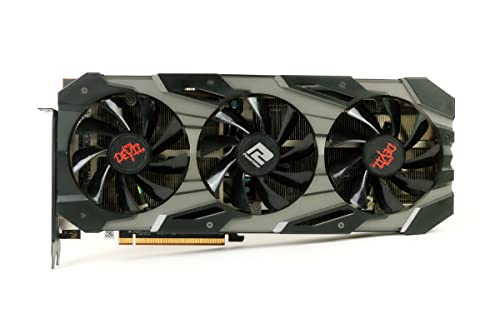
PowerColor Radeon RX 5700 XT 8GB
Best for: full-size PC cases needing 8GB AMD graphics
- Memory
- 8GB
- Graphics Processor
- AMD Radeon RX 5700 XT
- Memory Size
- 8GB
- Dimensions
- 11.8 × 5.2 × 2.09 inches
View on Amazon: PowerColor Radeon RX 5700 XT 8GB (paid link)
The PowerColor Radeon RX 5700 XT 8GB gives you a renewed graphics card featuring an AMD Radeon RX 5700 XT processor and 8GB of memory. It measures 11.8 inches long, 5.2 inches wide, and 2.09 inches high. This card suits you if you need 8GB memory capacity for desktop setups that can easily accommodate a card measuring nearly 12 inches in length.
Pros
- 8GB memory capacity
- AMD Radeon RX 5700 XT graphics processor
- Clear physical dimensions provided for clearance checks
Cons
- 11.8-inch length requires a larger computer case
- Sold as a renewed product rather than new
Good fit if
- You have a PC chassis with at least 11.8 inches of GPU clearance.
- You want an AMD Radeon RX 5700 XT GPU with 8GB memory.
- You are satisfied purchasing a renewed hardware component.
Skip if
- You build inside a compact case unable to house an 11.8-inch card.
- You strictly want brand-new hardware rather than renewed.
Verdict: PowerColor Radeon RX 5700 XT 8GB provides an AMD graphics processor with 8GB memory in an 11.8-inch package. It works best in mid-tower or full-tower setups with ample interior clearance.

Sapphire Nitro+ Radeon RX 580 8GB
Best for: multi-monitor setups needing legacy DVI support
- Memory
- 8GB
- Graphics Processor
- Radeon RX 580
- Memory Size
- 8GB
- Memory Type
- GDDR5
- Memory Bus Width
- 256-bit
- Dimensions
- 12.8 × 2.75 × 8.5 inches
View on Amazon: Sapphire Nitro+ Radeon RX 580 8GB (paid link)
The Sapphire Nitro+ RX 580 8GB GDDR5 gives you 8GB of GDDR5 memory over a 256-bit bus. It features a dual-fan cooling setup along with an included backplate. With five display outputs—two DisplayPort, two HDMI, and one DVI-D—this card supports up to five monitors simultaneously. It fits your setup if you need multi-display productivity or standard graphics output with legacy DVI support.
Pros
- Supports up to 5 displays simultaneously
- Wide port selection: 2 DP, 2 HDMI, and 1 DVI-D
- 256-bit memory bus width
- Dual-fan cooling system with backplate
Cons
- Uses older GDDR5 memory instead of GDDR6
- Large card footprint measuring 12.75 inches long
- Heavy build at 3.5 pounds
Good fit if
- You need to drive up to five displays from a single card.
- You require a native DVI-D port for legacy monitors alongside HDMI and DP.
- You have a PC case with at least 12.75 inches of clearance.
Skip if
- You require faster GDDR6 or GDDR6X memory.
- You have a compact case unable to accommodate a 12.75-inch card.
Verdict: Sapphire Nitro+ RX 580 8GB GDDR5 delivers broad five-output display versatility and a wide 256-bit bus. It provides a solid multi-monitor setup for cases that can fit its 12.75-inch length.

Gigabyte GeForce RTX 4060 Windforce 8GB
Best for: compact systems requiring an 8GB GPU
- Memory
- 8GB
- Graphics Processor
- GeForce RTX 4060
- Memory Size
- 8GB
- Memory Type
- GDDR6
- Memory Bus Width
- 128-bit
- Dimensions
- 7.56 × 4.72 × 1.61 inches
View on Amazon: Gigabyte GeForce RTX 4060 Windforce 8GB (paid link)
This GIGABYTE graphics card features an Nvidia GeForce RTX 4060 GPU paired with 8GB of GDDR6 VRAM across a 128-bit bus. The card measures 7.56 inches long, 4.72 inches wide, and 1.61 inches high, making it suitable for compact cases. It relies on a dual-fan WINDFORCE cooling setup. You get a compact form factor designed for tight computer cases.
Pros
- 8GB GDDR6 memory
- Compact 7.56-inch card length
- Dual WINDFORCE fan cooling
- GeForce RTX 4060 GPU
Cons
- Narrow 128-bit memory interface
- Two cooling fans rather than three
Good fit if
- You need a graphics card under 8 inches long.
- You want an Nvidia GeForce RTX 4060 with 8GB GDDR6 memory.
Skip if
- You require a 256-bit memory bus width.
- You prefer a triple-fan cooling solution.
Verdict: GIGABYTE GeForce RTX 4060 Windforce delivers 8GB GDDR6 memory and dual-fan cooling in a compact 7.56-inch body. It provides modern RTX 4060 processing for systems with limited clearance.
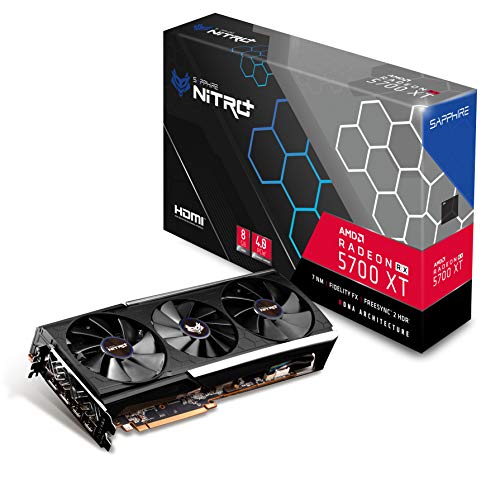
Sapphire NITRO+ Radeon RX 5700 XT 8GB
Best for: PCIe 4.0 systems needing dual HDMI ports
- Memory
- 8GB
- Graphics Processor
- Radeon RX 5700 XT
- Memory Size
- 8GB
- Memory Type
- GDDR6
- PCIe Interface
- PCIe 4.0
- Dimensions
- 17 × 9.5 × 3.5 inches
View on Amazon: Sapphire NITRO+ Radeon RX 5700 XT 8GB (paid link)
The Sapphire Radeon Nitro+ RX 5700 XT 8GB is a desktop graphics card equipped with 8GB of GDDR6 memory and a PCIe 4.0 bus interface. It features two HDMI ports and two DisplayPort outputs for multiple monitors. Measuring 17 inches long, 9.5 inches wide, and 3.5 inches high, it suits you if your computer case accommodates large expansion cards and you require high-bandwidth GDDR6 memory for your display setup.
Pros
- 8GB GDDR6 memory
- PCIe 4.0 bus interface
- Dual HDMI and dual DisplayPort outputs
- Factory overclocked UEFI profile
Cons
- Large 17-inch length requires substantial case clearance
- Lacks legacy video connectors such as DVI
Good fit if
- You need both dual HDMI and dual DisplayPort connections
- You have a PC case with at least 17 inches of clearance
- You want an 8GB card running on a PCIe 4.0 interface
Skip if
- You use a compact or small-form-factor chassis
- You rely on native DVI or analog display inputs
Verdict: Sapphire Radeon Nitro+ RX 5700 XT 8GB provides fast GDDR6 memory and flexible dual-display outputs via PCIe 4.0. Its 17-inch length means you must confirm your chassis has sufficient physical clearance before installing it.

Gigabyte GeForce GTX 1070 8GB
Best for: ATX setups needing 8K display support
- Memory
- 8GB
- Graphics Processor
- GeForce GTX 1070
- Memory Size
- 8GB
- Memory Type
- GDDR5
- Memory Bus Width
- 256bit
- Recommended PSU
- 500 W
View on Amazon: Gigabyte GeForce GTX 1070 8GB (paid link)
The Gigabyte GeForce GTX 1070 Windforce OC 8GB gives you 8GB of GDDR5 memory on a 256-bit bus for graphics bandwidth. It features an ATX form factor with a dual-blade Windforce fan system, an 11-inch card length, and 8K display support at 60Hz. Powered by 6+2 power phases, it requires a 500W power supply. This card suits you if you need an 8GB card for standard desktop builds.
Pros
- 8GB GDDR5 memory with 256-bit bus
- WINDFORCE 2X blade fan cooling system
- Supports 8K display output at 60Hz
- Engineered with 6+2 power phases
Cons
- Uses GDDR5 instead of newer GDDR6 memory
- Card length of 11.02 inches limits compact case fit
- Requires at least a 500W power supply
Good fit if
- You have an ATX chassis with over 11 inches of clearance.
- You need display output capable of up to 8K at 60Hz.
- You run a power supply rated at 500W or higher.
Skip if
- You need faster GDDR6 or GDDR6X memory technology.
- You are assembling a compact or small-form-factor build.
Verdict: Gigabyte GeForce GTX 1070 Windforce OC 8GB provides 8GB of GDDR5 memory and 8K display capability for standard ATX systems. It delivers reliable dual-fan cooling if your chassis accommodates its 11-inch length.

HP Nvidia Quadro T1000 8GB
Best for: slim PCIe 4X workstation systems
- Memory
- 8GB
- Graphics Processor
- Quadro T1000
- Memory Size
- 8GB
- Memory Type
- GDDR6
- Dimensions
- 9 × 7.3 × 2.6 inches
- Weight
- 0.76 ounces
View on Amazon: HP Nvidia Quadro T1000 8GB (paid link)
The HP Nvidia Quadro T1000 8GB GDDR6 is a dedicated graphics card fitted with 8GB of GDDR6 memory. Designed with a slim 2.6-inch height, it installs into systems via a PCIe 4X connection and outputs video through Mini Display connectors. You get modern high-speed memory in a lightweight 0.76-ounce package that measures 9 inches long. It suits you if you need compact 8GB GDDR6 hardware for specialized display setups.
Pros
- 8GB GDDR6 dedicated memory
- Low-profile 2.6-inch height
- Lightweight 0.76-ounce design
- Mini DisplayPort outputs
Cons
- Uses a PCIe 4X slot configuration
- Lacks full-size HDMI and DisplayPort connectors
- Nine-inch card length requires sufficient case depth
Good fit if
- You need an 8GB GDDR6 graphics card with a 2.6-inch height.
- You connect your screens using Mini DisplayPort cables.
- You have an available PCIe 4X slot.
Skip if
- You need full-size HDMI or standard DisplayPort ports.
- You need a card shorter than 9 inches.
Verdict: HP Nvidia Quadro T1000 8GB GDDR6 pairs 8GB of GDDR6 memory with a slim 2.6-inch profile for PCIe 4X systems. It provides multi-display output where taller graphics cards cannot fit.

MSI GeForce RTX 3070 8GB Graphics Card
Best for: gaming setups needing 256-bit GDDR6 memory
- Memory
- 8GB
- Graphics Processor
- GeForce RTX 3070
- Memory Size
- 8GB
- Memory Type
- GDRR6
- Memory Bus Width
- 256-Bit
- Use
- Gaming
View on Amazon: MSI GeForce RTX 3070 8GB Graphics Card (paid link)
This MSI graphics card equips your gaming setup with 8GB of GDDR6 memory on a 256-bit bus. It connects through HDMI and DisplayPort outputs for multiple display configurations and features Torx Fan cooling alongside Nvlink support. At 23.11 inches in length, 5.08 inches in width, and weighing 1 pound, you get dedicated hardware built strictly for gaming tasks that rely on high memory bandwidth.
Pros
- 8GB GDDR6 memory with a 256-bit interface
- Includes HDMI and DisplayPort connections
- Features Torx Fan cooling and Nvlink support
Cons
- Long listed length of 23.11 inches
- Lacks legacy display connections like DVI
Good fit if
- You need 8GB GDDR6 memory with a 256-bit interface for gaming.
- You have a PC chassis that fits a 23.11-inch card length.
- You connect displays using HDMI or DisplayPort.
Skip if
- You use a compact case that cannot clear 23.11 inches of space.
- You require DVI outputs for older monitor hardware.
Verdict: MSI GeForce RTX 3070 8GB provides 8GB GDDR6 memory on a 256-bit bus with Torx Fan cooling. Check your case clearance first to ensure it fits the 23.11-inch listed length.

ASUS Dual AMD Radeon RX 6600 XT 8GB
Best for: PCIe 4.0 gaming builds needing 8GB GDDR6
- Memory
- 8GB
- Graphics Processor
- Radeon RX 6600 XT
- Memory Size
- 8GB
- Memory Type
- GDDR6
- PCIe Interface
- PCIe 4.0
- Use
- Gaming
View on Amazon: ASUS Dual AMD Radeon RX 6600 XT 8GB (paid link)
The ASUS Dual Radeon RX 6600 XT 8GB is a dedicated gaming graphics card built on AMD RDNA 2 architecture. You get 8GB of GDDR6 memory and a PCIe 4.0 interface to handle your gaming library. Measuring 9.6 inches long and 1.9 inches thick, this card fits easily into standard PC cases. It weighs just 0.75 pounds, making it a lightweight option if you need capable 8GB hardware.
Pros
- 8GB GDDR6 memory
- PCIe 4.0 interface support
- Lightweight 0.75-pound build
- Moderate 9.6-inch card length
Cons
- Card width of 5.3 inches requires extra lateral space
- Specific display output ports are not listed in specs
Good fit if
- You want an 8GB GDDR6 graphics card for gaming.
- You have a PC case that accommodates a 9.6-inch card length.
Skip if
- You need a card narrower than 5.3 inches.
- You need specific display connection counts confirmed in the specifications.
Verdict: ASUS Dual Radeon RX 6600 XT 8GB provides 8GB of GDDR6 memory on a PCIe 4.0 interface for gaming systems. Its 9.6-inch length and 0.75-pound weight make it a manageable addition to compatible desktop cases.

Sapphire Pulse Radeon RX 580 8GB
Best for: multi-display setups requiring legacy DVI and HDMI
- Memory
- 8GB
- Graphics Processor
- Radeon RX 580
- Memory Size
- 8GB
- Memory Type
- GDDR5
- Boost Clock
- 1366 MHz
- Memory Bus Width
- 256-bit
View on Amazon: Sapphire Pulse Radeon RX 580 8GB (paid link)
The Sapphire Pulse Radeon RX 580 8GB is a desktop graphics card equipped with 8GB of GDDR5 video memory across a 256-bit bus. It runs at a boost clock of 1366 MHz and features a dual-fan cooling system with a backplate. You get five display outputs, including two HDMI, two DisplayPort, and one DVI-D port. This setup suits you if you need legacy and modern display support on Windows systems.
Pros
- 8GB GDDR5 memory with a 256-bit memory bus
- Dual-fan cooling system with an included backplate
- Five video outputs including two HDMI, two DisplayPort, and one DVI-D
- 1366 MHz boost clock
Cons
- Uses older GDDR5 memory rather than GDDR6
- Length of 11.25 inches requires substantial case clearance
- Listed operating system compatibility is limited to Windows 10 and 7
Good fit if
- You need a mix of DVI-D, HDMI, and DisplayPort video connections.
- You want 8GB of VRAM on a 256-bit memory bus.
- You have a computer case that accommodates an 11.25-inch card.
Skip if
- You require newer GDDR6 memory architecture.
- You build inside a compact case with less than 11.25 inches of GPU clearance.
Verdict: Sapphire Pulse Radeon RX 580 8GB pairs 8GB of GDDR5 memory on a 256-bit bus with dual-fan cooling and five display outputs. It is a solid choice if you need versatile port options and reliable clock speeds for compatible Windows systems.
Specifications side by side
| Spec | ZOTAC GeForce RTX 3070 Twin Edge OC 8GB | ASUS Dual GeForce RTX 4060 8GB | NVIDIA GeForce GTX 1080 8GB Founders Edition | Sapphire Pulse AMD Radeon RX 6600 8GB (Renewed) | Sapphire Pulse AMD Radeon RX 6600 XT 8GB | GIGABYTE RTX 4060 Ti WINDFORCE 8GB | PowerColor Radeon RX 5700 XT 8GB | Sapphire Nitro+ Radeon RX 580 8GB | Gigabyte GeForce RTX 4060 Windforce 8GB | Sapphire NITRO+ Radeon RX 5700 XT 8GB | Gigabyte GeForce GTX 1070 8GB | HP Nvidia Quadro T1000 8GB | MSI GeForce RTX 3070 8GB Graphics Card | ASUS Dual AMD Radeon RX 6600 XT 8GB | Sapphire Pulse Radeon RX 580 8GB |
|---|---|---|---|---|---|---|---|---|---|---|---|---|---|---|---|
| Graphics Processor | GeForce RTX 3070 | GeForce RTX 4060 | GeForce GTX 1080 | Radeon RX 6600 | Radeon RX 6600 XT | GeForce RTX 4060 Ti | AMD Radeon RX 5700 XT | Radeon RX 580 | GeForce RTX 4060 | Radeon RX 5700 XT | GeForce GTX 1070 | Quadro T1000 | GeForce RTX 3070 | Radeon RX 6600 XT | Radeon RX 580 |
| Memory Size | 8GB | 8GB | 8GB | 8GB | 8GB | 8GB | 8GB | 8GB | 8GB | 8GB | 8GB | 8GB | 8GB | 8GB | 8GB |
| Memory Type | GDDR6 | GDDR6 | GDDR5X | GDDR6 | GDDR6 | GDDR6 | not specified | GDDR5 | GDDR6 | GDDR6 | GDDR5 | GDDR6 | GDRR6 | GDDR6 | GDDR5 |
| Boost Clock | 1755 MHz | not specified | not specified | not specified | not specified | not specified | not specified | not specified | not specified | not specified | not specified | not specified | not specified | not specified | 1366 MHz |
| Memory Bus Width | 256-bit | not specified | not specified | not specified | not specified | 128-bit | not specified | 256-bit | 128-bit | not specified | 256bit | not specified | 256-Bit | not specified | 256-bit |
| PCIe Interface | PCIE 4.0 | PCIe 4.0 | not specified | not specified | not specified | not specified | not specified | not specified | not specified | PCIe 4.0 | not specified | not specified | not specified | PCIe 4.0 | not specified |
| Recommended PSU | not specified | not specified | not specified | not specified | not specified | not specified | not specified | not specified | not specified | not specified | 500 W | not specified | not specified | not specified | not specified |
| Slot Width | not specified | 2-Slot | not specified | not specified | not specified | not specified | not specified | not specified | not specified | not specified | not specified | not specified | not specified | not specified | not specified |
| Memory | 8GB | 8GB | 8GB | 8GB | 8GB | 8GB | 8GB | 8GB | 8GB | 8GB | 8GB | 8GB | 8GB | 8GB | 8GB |
| GPU | not specified | not specified | not specified | not specified | not specified | GeForce RTX 4060 Ti | not specified | Radeon RX 580 | GeForce RTX 4060 | not specified | not specified | not specified | not specified | not specified | Radeon RX 580 |
| Interface | PCIe 4.0 | PCIe 4.0 | not specified | not specified | not specified | not specified | not specified | not specified | not specified | PCIe 4.0 | not specified | not specified | not specified | PCIe 4.0 | not specified |
| Use | Gaming | not specified | not specified | Gaming | Gaming | not specified | not specified | not specified | not specified | not specified | not specified | not specified | Gaming | Gaming | not specified |
| Dimensions | not specified | 7.96 × 4.73 × 0.1 inches | not specified | not specified | 11.3 × 6.5 × 3.5 inches | 7.91 × 4.72 × 1.61 inches | 11.8 × 5.2 × 2.09 inches | 12.8 × 2.75 × 8.5 inches | 7.56 × 4.72 × 1.61 inches | 17 × 9.5 × 3.5 inches | 11 × 1.45 × 5.16 inches | 9 × 7.3 × 2.6 inches | 23.1 × 5.08 × 4.9 inches | 9.6 × 5.3 × 1.9 inches | not specified |
| Weight | not specified | 1.2 pounds | 12 ounces | 1.59 pounds | not specified | not specified | not specified | 3.5 pounds | not specified | not specified | not specified | 0.76 ounces | 1 pounds | 12 ounces | not specified |
| Length | not specified | not specified | 10.7 inches | 10.5 inches | not specified | not specified | not specified | not specified | not specified | not specified | not specified | not specified | not specified | not specified | 11.3 inches |
| Width | not specified | not specified | 3.7 inches | 6.5 inches | not specified | not specified | not specified | not specified | not specified | not specified | not specified | not specified | not specified | not specified | 3.5 inches |
| Size | not specified | RTX4060|V2|OC | not specified | not specified | not specified | not specified | not specified | not specified | not specified | 8 | not specified | not specified | RTX | 1.9"x5.3"x9.6" | not specified |
| Color | not specified | BLACK | not specified | black | not specified | not specified | not specified | not specified | not specified | not specified | not specified | not specified | not specified | not specified | not specified |
| Model | not specified | not specified | GTX-1080-FE | not specified | not specified | not specified | not specified | 11265-01-20G-cr | GV-N4060WF2OC-8GD-cr | not specified | not specified | N02454-001 | not specified | not specified | 11265-05-20G-cr |
Is an 8GB Graphics Card Worth It?
An 8GB memory configuration provides dedicated video memory for gaming and multi-monitor workstations. In daily operation, having 8GB allows you to run modern 1080p gaming setups, utilize DirectX 12 Ultimate ray tracing on supported RDNA 2 cards, and connect up to five monitors on a single board. The listings pair this 8GB capacity with GDDR5, GDDR5X, or GDDR6 memory standards on bus widths up to 256 bits, delivering graphical processing for multi-display desktop arrangements and displays up to 8K resolution.
Worth it if
- You run dedicated 1080p gaming builds that utilize GDDR6 memory and DirectX 12 Ultimate ray tracing.
- You need a multi-screen workstation or desktop driving up to five monitors or up to an 8K display.
Skip it if
- You only perform basic computing tasks that do not require dedicated 8GB GDDR5, GDDR5X, or GDDR6 video memory.
- You have a compact case with strict clearance limits that cannot accommodate cards spanning from 7.56 to 23.11 inches.
When planning your full system configuration, you can review specifications for 8GB ddr5 RAM alongside your graphics card memory choices.
How We Selected These Cards
To select the 15 graphics cards for this guide, we identified models where the listing explicitly states 8GB memory in the title or specifications list. We show only one variant per product family to prevent repetition. Every detail comes directly from published manufacturer specifications, as we do not physically handle or test the cards ourselves.
To organize the list, products in stock appear first, then by Amazon sales rank (better-selling products first), followed by how many criteria their published specifications meet. Live availability updates at least daily directly on the page, ensuring you always see current stock without outdated inventory information.
How to Choose the Right 8GB Graphics Card
-
Check PCIe Interface Generation
You should check your motherboard expansion slot version before buying an 8GB graphics card. Newer models use PCIe 4.0 interfaces, while older motherboards and legacy cards rely on PCIe 3.0. A PCIe 4.0 card functions in a PCIe 3.0 slot, but it operates at PCIe 3.0 transfer rates. For instance, the ASUS Dual AMD Radeon RX 6600 XT 8GB is built for PCIe 4.0 systems. If your desktop motherboard only supports PCIe 3.0, you can still install it, but matching the interface generation to your motherboard gives you native bandwidth without protocol bottlenecks.
-
Compare Memory Type Standards
Even though every card in this guide provides 8GB of memory, the memory type determines memory bandwidth and efficiency. Older graphics architectures use GDDR5 or GDDR5X memory, whereas current platforms utilize GDDR6 memory. For desktop gaming and graphical rendering, GDDR6 offers higher transmission speeds than older GDDR5 configurations. The NVIDIA GeForce GTX 1080 8GB Founders Edition, for example, utilizes GDDR5X memory. If your workloads demand modern throughput standards for gaming or content creation, prioritize models configured with GDDR6 memory to ensure your hardware aligns with current software demands.
-
Evaluate Memory Bus Width
You should review the memory bus width when evaluating memory performance across 8GB cards. A wider bus width allows more data to pass between the graphics processor and the memory chips in each cycle. A 256-bit bus provides a wider data pipeline compared to narrower 128-bit configurations. The ZOTAC GeForce RTX 3070 Twin Edge OC 8GB features a 256-bit memory bus alongside its GDDR6 memory. If you run high-resolution gaming across multiple screens, choosing a card with a 256-bit bus helps prevent memory transfer limits during intensive graphical loads.
-
Measure Physical Case Clearance
You must check your computer chassis dimensions before selecting an 8GB card. Card length varies drastically across manufacturers, even among cards using identical memory capacities. Some models feature extended cooling shrouds that require significant interior room. For example, the Sapphire NITRO+ Radeon RX 5700 XT 8GB measures 17 inches in length. Standard mid-tower cases often have internal drive cages or front radiators that block oversized hardware. Measure the clear distance from your rear expansion bracket to any front-mounted case components to ensure your chassis fits the card without clearance problems.
-
Verify Display Connector Outputs
You need to match the video outputs on the card to the input ports on your monitors. Some models provide legacy DVI ports alongside HDMI, while workstation cards utilize Mini Display connections to conserve space. For example, the HP Nvidia Quadro T1000 8GB is built for hardware layouts configured for Mini Display outputs. If you use standard HDMI or DisplayPort cables, connecting to Mini Display ports requires dedicated adapters or specialized cables. Always verify the port types and total port count before purchase to support your existing monitors directly without extra conversion hardware.
-
Confirm Slot Profile Dimensions
You should check how many expansion slots your desktop case can accommodate before choosing a card. Many dedicated gaming cards occupy two full expansion slots, while compact cards fit tighter profiles. For compact desktop builds, the ASUS Dual GeForce RTX 4060 8GB provides an efficient 7.96-inch frame engineered for standard 2-slot cases. If your motherboard has other expansion cards installed right below the primary graphics slot, verify that the card thickness does not block adjacent slots or restrict cooling airflow to the graphics processor fans.
Frequently asked questions
What is the difference between GDDR5, GDDR5X, and GDDR6 on an 8GB graphics card?
The memory type indicates data transfer speed and generational architecture across different 8GB cards. Older cards like the Sapphire Nitro+ Radeon RX 580 rely on standard GDDR5, while the NVIDIA GeForce GTX 1080 Founders Edition uses GDDR5X. Modern releases like the ASUS Dual GeForce RTX 4060 feature GDDR6 memory. Faster memory technologies transfer data more efficiently between the graphics processor and the 8GB buffer during rendering tasks.
Can an 8GB graphics card support multiple display monitors?
Yes, most 8GB graphics cards include multiple physical video ports to run multi-monitor arrangements. For example, the Sapphire Pulse Radeon RX 580 features five display outputs, accommodating both HDMI and legacy DVI connections. Other options, like the Sapphire NITRO+ Radeon RX 5700 XT, provide dual HDMI outputs. If you use specialized professional displays, the HP Nvidia Quadro T1000 uses dedicated Mini Display outputs for compact workstation environments.
How does a 256-bit memory bus affect an 8GB graphics card?
A 256-bit memory bus widens the data path between the GPU core and the 8GB memory pool. A wider bus width allows more data to travel simultaneously per clock cycle. Cards such as the ZOTAC GeForce RTX 3070 Twin Edge OC and Sapphire Nitro+ Radeon RX 570 feature this 256-bit configuration. This wide pathway helps maintain smooth asset streaming when processing high-resolution visual textures or handling demanding graphics workloads.
What is the smallest 8GB graphics card for a compact PC build?
The Gigabyte GeForce RTX 4060 Windforce 8GB is among the shortest options on this list at 7.56 inches long. Another compact choice is the GIGABYTE RTX 4060 Ti WINDFORCE 8GB, measuring 7.91 inches, closely followed by the ASUS Dual GeForce RTX 4060 at 7.96 inches. These shorter dual-fan designs fit into standard two-slot desktop cases where longer cards exceeding 11 or 12 inches cannot clear internal drive cages or front radiators.
Can you install an 8GB graphics card in a PCIe 4X expansion slot?
Yes, specific compact workstation cards are engineered specifically to fit into smaller PCIe 4X slots. The HP Nvidia Quadro T1000 8GB runs on a PCIe 4X slot configuration rather than the standard full-length PCIe x16 slot. This makes it compatible with specialized desktop towers and small-form-factor motherboards that lack standard full-length graphics card lanes, while still providing 8GB of dedicated GDDR6 memory for professional graphical software.
Can an 8GB graphics card output to an 8K display?
Yes, specific 8GB graphics cards provide native hardware capability to output signals to 8K resolution displays. For instance, the Gigabyte GeForce GTX 1070 8GB lists direct 8K display support. To utilize this resolution, you must connect the card to a compatible high-bandwidth monitor using the supported display outputs. Keep in mind that pushing 8K resolution requires substantial processing power from the graphics chip alongside its 8GB frame buffer.
How do dual-fan cooling systems work on 8GB graphics cards?
Dual-fan systems use two dedicated fans paired with heatsinks to move heat away from the GPU core and 8GB memory. Cooling configurations differ across manufacturers. The ZOTAC GeForce RTX 3070 Twin Edge OC features IceStorm 2.0 dual fans that stop spinning completely during low workloads to keep operation quiet. Similarly, the MSI GeForce RTX 3070 utilizes Torx Fan cooling to direct airflow across the internal thermal dissipation fins under load.